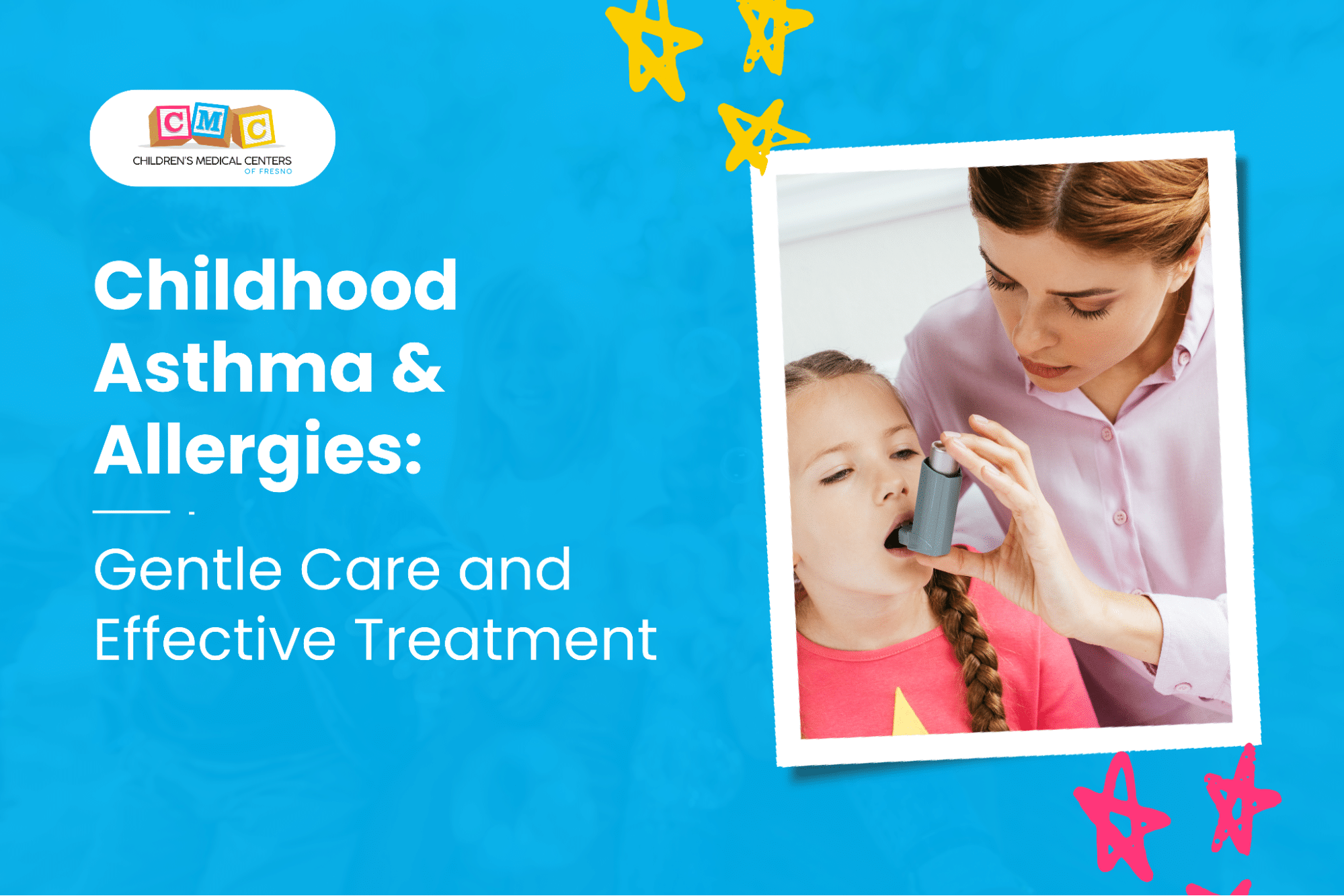
Watching your child struggle to breathe or cough can be stressful for any parent. Childhood asthma affects many children, and recognizing symptoms early is key to keeping them safe and comfortable. Even mild symptoms can disrupt sleep, school, or play.
At Children’s Medical Centers of Fresno (CMC Fresno), our allergy clinic combines expert medical care with compassionate guidance. We focus on understanding your child’s unique needs while helping parents gain confidence in managing allergy symptoms. Personalized care and tailored treatment plans allow children to breathe easier and live more comfortably every day.
In this blog, we will explain common triggers, describe effective asthma treatments, and share practical tips to manage symptoms at home. You’ll find easy checklists and step-by-step guidance that make daily care simpler. Our goal is to reassure you while empowering your kids to stay healthy and active.
Breathe Easier with Expert Asthma Guidance Today
Schedule an Appointment Now
What Are Allergies in Children?
Allergies happen when a child’s immune system reacts to an allergen (normally harmless substance). This can cause discomfort, frustration, or anxiety for both the child and the parent. These reactions can range from mild sneezing and itchy eyes to coughing, hives, or skin irritation that interrupts sleep, school, or play.
Sometimes, the signs of allergies can be subtle, and parents may not immediately recognize them. To help you identify potential triggers and reactions early, here is a helpful checklist of common symptoms to watch for in children:
Checklist: Signs Your Child May Have an Allergy
- Persistent sneezing or a runny nose
- Coughing or wheezing that doesn’t go away
- Red, itchy skin or hives
- Swelling of lips, eyes, or face
- Fatigue after exposure to certain environments
By noting these signs and patterns, parents can take action early, helping prevent complications such as childhood asthma and improving overall comfort.
What Happens During an Allergy?
When a child encounters an allergen, their body may respond as if the substance is harmful, even if it is harmless to most people. When a child’s body reacts to an allergen, it releases chemicals that cause inflammation, leading to sneezing, itching, wheezing, or skin irritation. In children with childhood asthma, these reactions can sometimes make breathing harder, requiring careful monitoring and prompt medical care.
Understanding what happens inside the body during an allergic reaction can help parents feel more prepared and confident in providing support. The process typically follows several steps that show how the body responds to the trigger:
Step-by-Step: Understanding an Allergic Reaction
- Step 1. Exposure: Your child comes into contact with a trigger such as pollen, dust, or pet dander.
- Step 2. Immune Response: The body releases histamines and other chemicals to fight the “intruder.”
- Step 3. Symptoms Appear: Signs such as coughing, wheezing, hives, or redness may develop.
- Step 4. Medical Support: Timely evaluation from a pediatric pulmonologist ensures proper treatment and prevents complications.
By knowing these steps, parents can act promptly, provide relief, and reduce the child’s discomfort while avoiding unnecessary anxiety.
Types of Allergies in Children
Children can experience a wide variety of allergy symptoms, and understanding the type of allergy is key to effective management. Some children may react to certain food. Others can have a reaction due to environmental triggers like pollen or dust. And there are some that can react to medications or insect stings. Early identification allows families to implement strategies that reduce exposure and discomfort, making everyday life safer and more predictable.
Here’s a breakdown of common allergy types in children and their typical effects:
| Type of Allergy | Common Triggers | Typical Symptoms in Children |
|---|
| Food Allergies | Milk, eggs, peanuts, tree nuts, shellfish | Hives, swelling, stomach discomfort |
| Environmental Allergies | Dust, mold, pollen, pet dander | Sneezing, congestion, itchy eyes |
| Drug Allergies | Antibiotics, other medications | Rashes, in rare cases, severe reactions |
| Insect Sting Allergies | Bee or wasp stings | Swelling, rarely systemic reactions |
| Skin Allergies | Eczema, contact dermatitis | Redness, irritation, persistent itching |
Understanding the type of allergy helps parents take proactive steps and work with specialists to keep their child safe and comfortable.
Asthma in Children
Childhood asthma is a chronic condition that inflames and narrows the airways, making breathing more difficult. Along with asthma, many can also experience allergic rhinitis. This include sneezing, congestion, and itchy eyes. By understanding the condition and its triggers, parents can help children manage symptoms and prevent flare-ups.
Creating a personalized asthma care plan is essential for reducing symptoms, monitoring breathing, and knowing when to seek medical attention. Proactive care allows your child to participate fully in school, play, and sports while lessening disruptions from asthma episodes.
Important Signs of Childhood Asthma
Noticing the early signs of childhood asthma can feel worrying, but recognizing them promptly helps you protect your child and respond quickly. Because symptoms are often subtle, keeping a close eye and gently tracking any changes can make a big difference in their comfort and safety.
Key Signs to Watch
- Frequent coughing, especially at night or after exercise
- Wheezing or whistling sounds when breathing
- Shortness of breath or rapid breathing
- Chest tightness or discomfort
- Fatigue or difficulty keeping up with peers
Keeping a simple symptom diary and sharing your observations with your pediatric pulmonologist can provide guidance and peace of mind. Spotting changes early helps prevent serious asthma attacks and keeps your child safer and more comfortable every day.
Types of Childhood Asthma
Every child’s asthma is a little different, with unique triggers and needs. Some children react to allergens, while others may have symptoms during play, illness, or stress. Understanding your child’s type of asthma helps you and their doctor create a care plan that keeps them safe and comfortable.
Common types include:
- Allergic Asthma: Triggered by pollen, dust, or pets
- Exercise-Induced Asthma: Symptoms appear during or after physical activity
- Non-Allergic Asthma: Triggered by infections, weather changes, or stress
- Severe Asthma: Persistent symptoms that require specialized management
Tailoring treatment to the type of asthma helps your child stay active, reducing their risk of experiencing serious flare-ups.
Understanding Common Triggers
Asthma and allergies can be triggered by a variety of environmental, dietary, and lifestyle factors. Knowing these triggers is important for reducing exposure and managing allergy symptoms.
Before implementing preventive strategies, it helps to understand the most common triggers:
Step-by-Step: Minimizing Triggers at Home
- Keep windows closed during high pollen seasons
- Use HEPA filters and vacuum regularly
- Wash bedding weekly in hot water
- Limit pets in bedrooms
- Track symptoms in a diary to identify patterns
Using these strategies along with the right treatment can help reduce asthma or allergy flare-ups, so your child can play, learn, and enjoy each day more safely.
Best Medicine for Asthma and Allergies
The best treatment for your child is tailored to their needs. This can look like a combination of medications and daily strategies to keep them comfortable. Allergy management may involve antihistamines, immunotherapy, or adjusting their environment. While, asthma treatment often includes inhaled medications to help them breathe more easily. Regular follow-ups with specialists ensure that treatment plans remain effective as children grow.
How is Childhood Asthma Treated?
Managing asthma means supporting your child every day, keeping track of symptoms, and taking preventive steps to reduce flare-ups.
Asthma Care Plan Essentials
- Daily Control Medication: Helps prevent airway inflammation and flare-ups
- Rescue Inhalers: Provide immediate relief during symptoms
- Regular Monitoring: Track peak flow and note patterns
- Emergency Plan: Know when to seek urgent medical attention
Following a structured asthma care plan allows children to participate fully in school, play, and social activities while reducing the risk of serious episodes.
Why Families Trust CMCFresno for Childhood Asthma and Allergies

Managing childhood asthma and allergy symptoms can be stressful for parents, but having access to a compassionate and knowledgeable team makes all the difference. Children with asthma or allergies can continue to enjoy school, play, and social activities when care is proactive and well-coordinated. By recognizing triggers, following a structured treatment plan, and monitoring symptoms, families can reduce stress, prevent complications, and support their child’s long-term health and well-being.
At Children’s Medical Centers of Fresno, we are dedicated to providing child-centric care that combines medical expertise with a compassionate approach. Our team works closely with families to create safe, effective, and manageable plans so children can breathe easier, stay comfortable, and thrive every day.
Relieve Your Child’s Allergy Symptoms with Care
Book an Appointment Today
It can be worrying to see your child cough, wheeze, or sneeze frequently. Pay attention to common allergy symptoms like sneezing, hives, or nasal congestion, and observe if breathing issues occur during activity or at night. Early evaluation by a pediatric specialist ensures your child receives the proper guidance and care to stay safe and comfortable.
Many parents hope these conditions will disappear over time. Some children may experience improvement, but childhood asthma and allergies often require ongoing monitoring, medication adjustments, and preventive care to keep symptoms under control and ensure your child’s well-being.
Seeing your child struggle to breathe can be frightening. Follow your child’s personalized asthma care plan, use rescue inhalers as directed, and stay calm. If symptoms do not improve quickly or worsen, seek urgent medical care immediately to protect your child’s health.
Regular check-ins help children manage childhood asthma and allergy symptoms effectively. Many families benefit from at least two visits per year, or more if symptoms are frequent, so your pediatric specialist can adjust treatment and provide reassurance for both you and your child.
 inquiry@cmcfresno.com
 (559) 455-1500