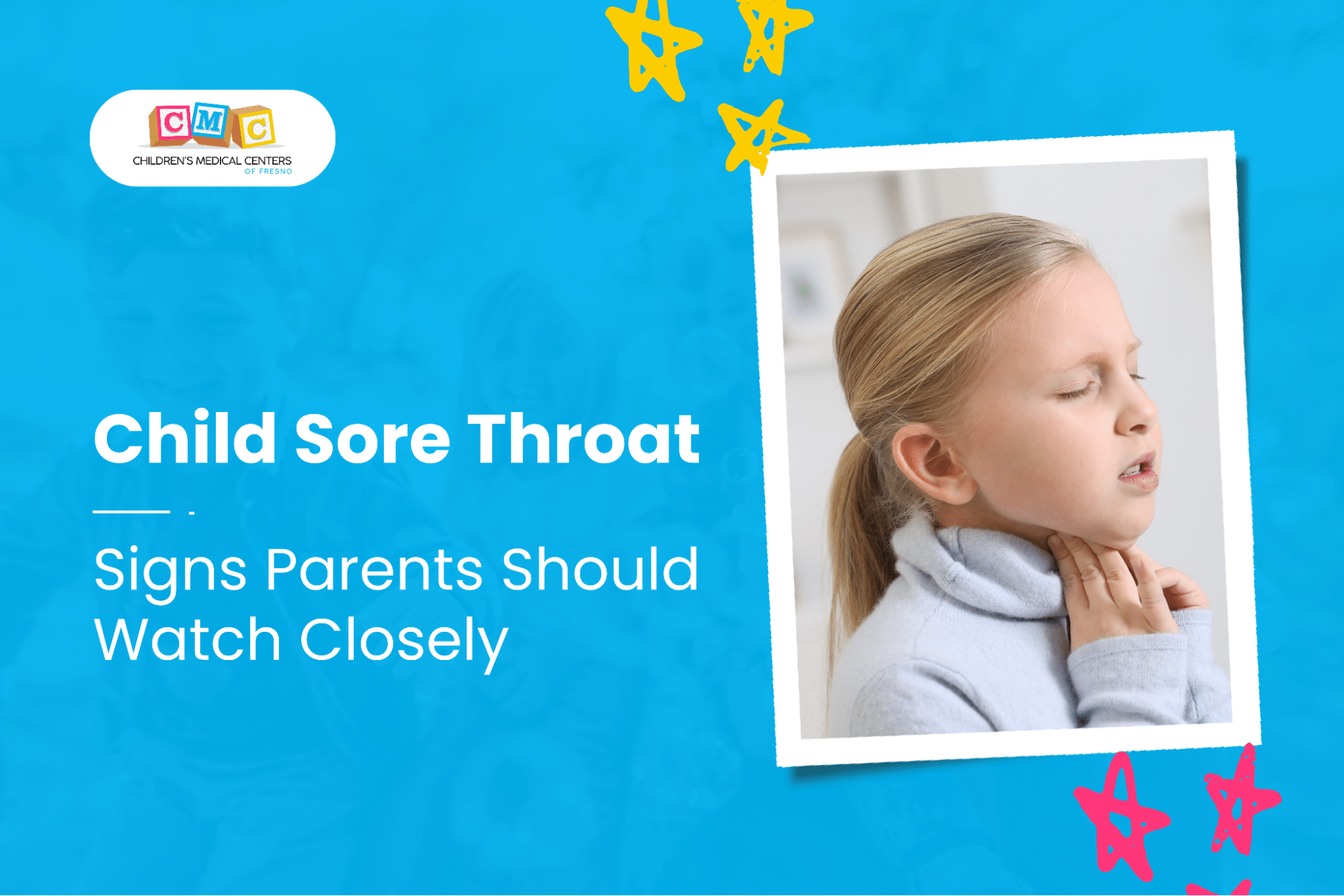
There are moments in parenting when something feels slightly off, even if nothing looks serious at first. Your child may seem quieter than usual, refuse meals, or complain that swallowing hurts. It is the kind of situation that sits in the background of your day and makes you wonder if you should be concerned or simply wait it out.
One of the most common reasons behind this is sore throat, and while it is often mild and self-limiting, it can sometimes signal an infection or irritation that needs proper care. The challenge is not just the symptom itself, but knowing how to interpret it without second-guessing yourself.
At CMCFresno, we often meet parents in this exact space of uncertainty. The goal is never to create alarm, but to help you understand what your child’s body is communicating so you can respond with confidence rather than doubt.
This guide will walk you through what a sore throat means, what to watch for, and when it is time to seek medical attention.
Your Child’s Health Deserves Prompt Care
Book a Pediatric Visit Today
What is happening when your child has throat pain?
A sore throat refers to inflammation or irritation in the throat that makes swallowing, speaking, or even resting uncomfortable. It is extremely common in children because their immune systems are still developing and they are frequently exposed to infections in school and social environments.
In many cases, sore throat symptoms improve on their own with rest and hydration. However, there are times when the cause is bacterial or linked to other conditions that require clinical evaluation. Understanding this difference is important because it shapes how you respond at home.
Decisions around sore throat treatment are not based on discomfort alone but on the cause, severity, and duration of symptoms. This is why observation over time is often more useful than reacting to a single moment of pain.
What you might notice first
Children rarely explain throat discomfort in a clear or direct way. Instead, the signs often show up in behavior and small changes in daily routine that are easy to overlook at first.
| Timeframe | What you may notice | What it may mean |
|---|
| Day 1–2 | Slight drop in appetite, quieter behavior, less interest in usual activities | Early stage of sore throat symptoms, often subtle and easy to overlook |
| Day 2–3 | Complaints of throat pain when swallowing, mild fever, irritability, reduced energy | Symptoms becoming more defined and linked to possible sore throat causes |
| Day 3–5 | Peak discomfort, refusal to eat, more noticeable fatigue, possible persistent fever | Infection or irritation is more active, may require closer monitoring or sore throat treatment |
| Day 5+ | Gradual improvement or continued worsening of symptoms | Improvement suggests mild case, persistence may indicate need for medical evaluation including severe sore throat |
What matters most is not a single moment, but how the pattern evolves over time. Watching this progression helps you decide when reassurance is enough and when it is time to act.
Why it develops in children
There are several reasons your child may develop throat irritation, and most of them are related to everyday exposure. Viral infections are the most common cause, especially in school-aged children who are frequently in close contact with others.
Bacterial infections can also cause more intense symptoms and may last longer without appropriate treatment. In other cases, dryness in the air, exposure to smoke, or environmental irritants can contribute to discomfort.
These factors are commonly grouped under sore throat causes, and they often overlap, which is why symptoms can look similar even when the underlying reason is different.
To make this easier to recognize, here is a quick checklist you can mentally run through:
- Has your child recently been around other sick children
- Are symptoms appearing after school or social activities
- Is there exposure to dust, smoke, or dry air at home
- Do symptoms seem to return in similar environments or seasons
- Is the discomfort getting stronger instead of easing over time
If you find yourself checking off more than one of these, it becomes more important to observe how symptoms progress rather than assuming it will pass quickly.
This is also why monitoring patterns over time is more helpful than trying to identify the exact cause immediately at home.
When allergies may be involved
Not all throat discomfort is caused by infection. Some children experience repeated irritation due to environmental sensitivities that affect the respiratory system over time.
Dust, pollen, and seasonal changes can trigger symptoms that resemble infection but tend to recur in specific settings or times of the year. These patterns are often linked to sore throat allergies, especially when symptoms come and go rather than steadily worsening.
Supporting your child’s recovery at home
Most mild cases of throat irritation can be managed with supportive care at home. Rest allows the immune system to recover, while adequate fluid intake helps soothe irritation and prevent dehydration.
Soft foods are often easier to tolerate, especially when swallowing is uncomfortable. Warm liquids can also provide relief and make eating less stressful for the child. These small adjustments often make a noticeable difference in comfort levels during recovery.
In many cases, sore throat treatment focuses on symptom relief and careful monitoring rather than immediate medication. The goal is to support the body’s natural recovery while staying alert to any signs of progression.
What symptoms should raise attention
While many sore throats are mild, there are situations where closer attention is needed. If your child’s discomfort is persistent, worsening, or affecting their ability to eat and drink, it should not be ignored.
Additional warning signs include high or prolonged fever, visible swelling in the neck, or significant pain when swallowing. These may indicate a more serious infection or complication.
A severe sore throat is not defined by discomfort alone but by how much it interferes with normal daily function and whether it continues to escalate instead of improving.
To help you assess this more clearly, here is a simple guide:
| Severity Level | What you may notice | What to do |
|---|
| Mild | Slight discomfort, able to eat and drink, no fever or low-grade fever, normal activity with minor changes | Monitor at home, encourage fluids, rest, and comfort care |
| Moderate | Pain when swallowing, reduced appetite, mild to moderate fever, noticeable fatigue or irritability | Continue home care but observe closely, consider consulting if no improvement in a few days |
| Concerning | Persistent pain, refusal to eat or drink, higher fever, swollen glands, worsening symptoms over time | Seek medical advice to evaluate need for sore throat treatment |
| Severe | Difficulty swallowing or breathing, inability to stay hydrated, high or prolonged fever, extreme discomfort | Immediate medical evaluation for possible severe sore throat |
At CMCFresno, we encourage parents to trust when something feels different from their child’s usual illness pattern. Even if symptoms seem manageable, a shift in behavior or intensity is often worth checking early.
How to prevent a sore throat?
Prevention is built on simple, consistent habits that reduce exposure to infections and irritants. Regular handwashing is one of the most effective ways to limit the spread of germs.
Avoiding shared utensils and encouraging good hygiene practices also make a difference, especially in group settings. Environmental awareness is important as well, particularly for children sensitive to triggers linked to allergies and sore throat.
To make this easier to apply daily, here are practical habits you can reinforce at home:
- Encourage handwashing before meals and after outdoor play
- Avoid sharing utensils, cups, or water bottles
- Keep your child hydrated throughout the day
- Maintain clean indoor air and reduce dust buildup
- Limit exposure to smoke and strong irritants
- Ensure consistent sleep to support immune health
Small daily habits may seem simple, but they play a significant role in reducing repeat episodes.
When to Call the Pediatrician
While many sore throats are mild, there are situations where closer attention is needed. If your child’s discomfort is persistent, worsening, or affecting their ability to eat and drink, it should not be ignored.
Additional warning signs include high or prolonged fever, visible swelling in the neck, or significant pain when swallowing. These may indicate a more serious condition.
A severe sore throat is not defined by discomfort alone but by how much it interferes with normal daily function and whether it continues to escalate.
When to Trust Your Instinct and Take Action

It is easy to second-guess yourself when symptoms seem small at first. You weigh whether to wait, observe, or act, all while trying to keep your child comfortable. That hesitation is something every parent experiences.
A sore throat may pass quickly, but what matters is how it changes over time and how your child responds to it. Subtle shifts in behavior, energy, or appetite are often your earliest signals, and they deserve attention just as much as visible symptoms.
At CMCFresno, care is built around clarity and early guidance. You are not expected to figure everything out on your own or wait until symptoms become severe before seeking help. When something feels different, getting the right support early can make the entire experience easier for both you and your child.
The goal is not just recovery, but peace of mind knowing you made the right call at the right time.
Early Care Helps Prevent Bigger Concerns
Schedule a Consultation Now
Most sore throats improve within a few days with rest, fluids, and supportive care. If symptoms linger beyond that or begin to worsen instead of improve, it is best to have your child evaluated.
Yes, allergies can irritate the throat and cause recurring discomfort, especially when triggered by dust, pollen, or changes in the environment. These cases often come and go depending on exposure.
No, antibiotics are only needed when a bacterial infection is confirmed by a healthcare provider. Many sore throats are viral and improve without antibiotic treatment.
Early signs are often subtle. You may notice changes in appetite, lower energy, mood shifts, or your child becoming quieter than usual before they clearly say their throat hurts.
Seek medical care if your child has trouble breathing or swallowing, refuses fluids, has a high or persistent fever, or if symptoms are getting worse instead of improving.
 inquiry@cmcfresno.com
 (559) 455-1500