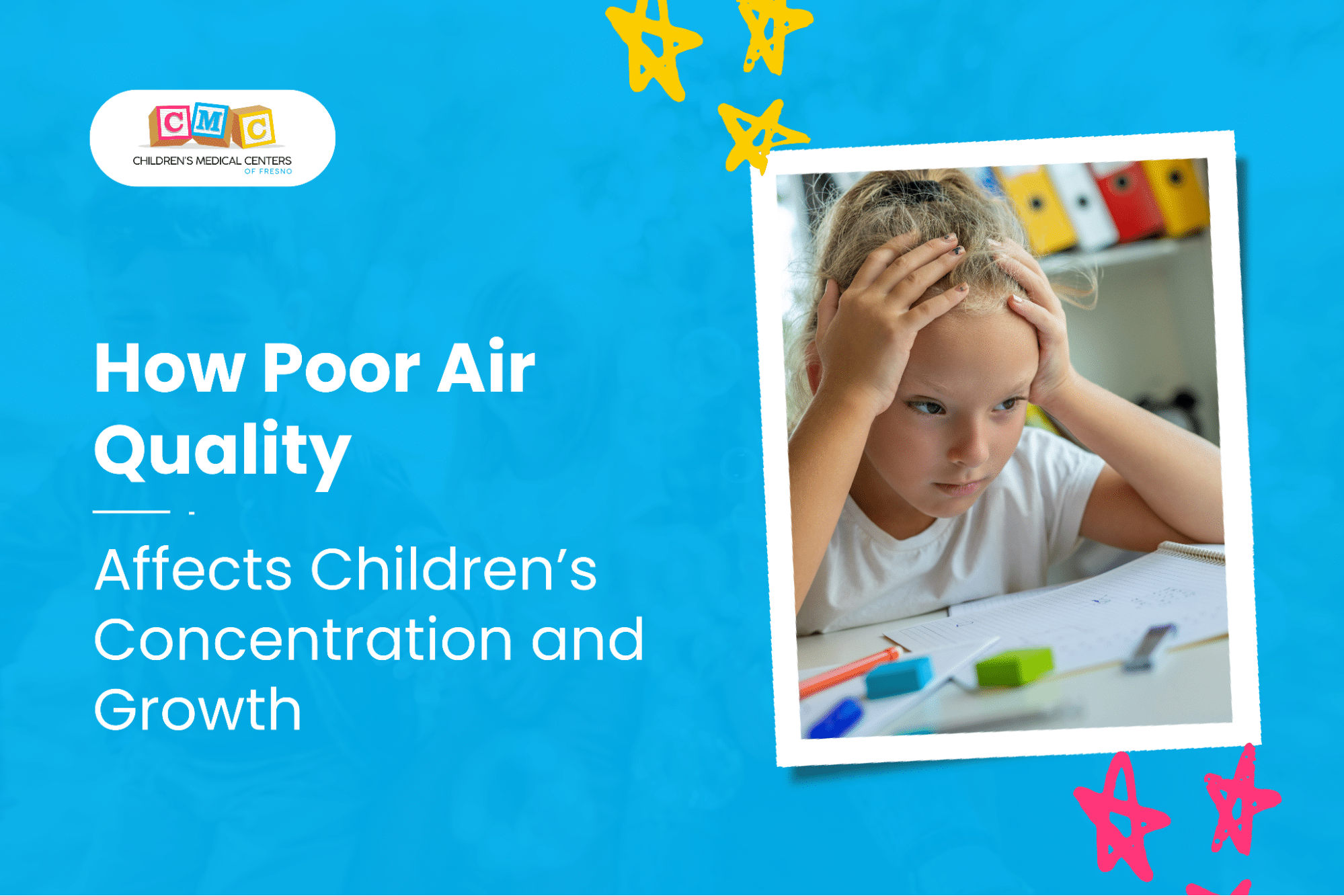
When your child has trouble focusing, it can feel worrying and even overwhelming. Many parents first think about sleep, school pressure, or screen time, trying to figure out what is going on. What is often missed is the effects of poor air quality on children, which can quietly disrupt attention, mood, and learning every single day.
At Children’s Medical Centers of Fresno, we often meet families who are doing everything right but still notice changes in their child’s focus, behavior, or learning. It can feel confusing and even worrying when there is no clear explanation.
This blog is here to help you understand one often overlooked factor, how the air your child breathes may be affecting their attention, development, and overall well-being. Often, environmental factors like air quality are part of the picture. Understanding this connection can bring clarity, reassurance, and practical next steps.
When Breathing Is Easier, Kids Focus Better
Schedule an Appointment Now
What Is Air Pollution?
Air Pollution refers to invisible particles and gases in the air that can still affect how the body functions. Even when environments appear clean, these particles may be present in amounts that impact health over time.
Children are more affected because they breathe faster and take in more air relative to their size. This increases exposure throughout the day, especially in enclosed environments. Their bodies are also still developing, which makes them more responsive to environmental changes.
Understanding air pollution gives parents a clearer view of how everyday environments can influence learning, behavior, and overall well-being.
Types of Pollutants
Poor air quality can come from many familiar sources in and around the home. These sources often build up gradually and may go unnoticed until symptoms appear.
Common indoor sources include:
- Dust accumulation in carpets and furniture
- Mold growth in damp or poorly ventilated spaces
- Smoke from cooking or tobacco exposure
- Chemical fumes from cleaning products or air fresheners
Outdoor pollutants such as traffic emissions and industrial particles can also enter indoor spaces. Once inside, they may remain trapped when ventilation is poor. This leads to airflow is being limited.
Why School-Going Children Are More Sensitive
Kids are in a stage of rapid development. This means that children’s brain growth is more responsive to their daily environment.
They also spend extended hours in school environments where air circulation can vary. Exposure during these hours adds to what they experience at home. Over time, this repeated exposure becomes more relevant to overall health and learning.
Their developing respiratory and immune systems also process environmental particles differently, which increases sensitivity during these years.
How Poor Air Quality Affects the Brain and Concentration
Exposure to poor air quality can influence how efficiently oxygen is delivered to the brain. Constantly being exposed to poor air quality can dull their alertness, mental stamina, and ability to stay focused during tasks.
Inflammatory responses in the body may also play a role in cognitive function. These changes can influence how children process information and stay engaged with learning activities.
Common signs include:
- Difficulty maintaining focus
- Increased mental fatigue
- Slower task completion
- Heightened irritability during schoolwork
Impact on Neurodevelopment and Learning
Healthy learning relies heavily on how stable children’s brain growth is throughout their early years. During this stage, the brain is especially active in building pathways for reasoning, memory, and language.
Environmental stressors can affect how efficiently these processes develop. Some children may show slower academic progress or difficulty staying consistent with learning tasks.
These changes are not always immediately noticeable. They tend to appear over time as academic demands increase.
Air Quality and Kids: What the Evidence Says
Research on air pollution continues to show a clear connection between environmental exposure and how children think and learn.
Recent findings show that exposure to air pollution is associated with differences in verbal development and overall cognitive function in children, suggesting that its effects go beyond short-term focus and may influence how learning develops over time.
Long-Term Effects of Air Pollution on Child Brain Development
Long-term exposure to poor air quality can influence developmental patterns in attention, emotional regulation, and cognitive consistency. Over time, children may experience changes that build in stages rather than appearing all at once. This progression can often be seen more clearly when broken down over typical developmental periods:
- Early exposure (early childhood): subtle changes in attention span and energy levels may begin to appear
- School-age years: difficulties with sustained focus and learning consistency may become more noticeable in classroom settings
- Later childhood: challenges in academic confidence and task completion may emerge during higher cognitive demands
- Ongoing exposure: effects may become more persistent, especially in environments with repeated poor air quality
Early awareness allows for better environmental adjustments during key developmental years. Small improvements made consistently over time can support healthier cognitive and emotional development.
Protecting Your Child from Air Pollution
To lessen poor air quality on children, begin with small, consistent changes at home. These adjustments do not need to be complex to make a difference.
Helpful steps include:
- Keeping living spaces clean and dust-free
- Improving airflow when outdoor air is safe
- Limiting strong chemical cleaners
- Using air purifiers in key areas
Where Better Focus Meets Thoughtful Pediatric Care

Even simple changes can create a more comfortable and supportive environment for focus and learning.
When children struggle with focus or learning, it can feel frustrating for parents who are trying to understand what is changing. Many factors can play a role, and it is not always clear where to begin. Poor air quality in children is one of those influences that can quietly affect attention, energy, and daily performance.
Understanding this connection can help parents see changes in concentration or behavior differently. It makes it easier to look beyond surface symptoms and consider how environment and development work together. This can also help parents take small, practical steps to create a healthier home environment.
At Children’s Medical Centers of Fresno, families are supported in understanding these concerns in a clear and thoughtful way. Our approach to pediatric care in Fresno includes looking at environmental factors that may not always be obvious. When needed, we work alongside child development specialists to better understand how each child is growing and learning.
Every child deserves an environment that supports their ability to focus, learn, and feel well each day.
Healthy Spaces Support Child Brain Development
Book an Appointment Today
FAQs
When the air isn’t as clean, it can make it harder for kids to stay focused. Exposure to air Pollution may affect how the brain processes information, which can show up as shorter attention spans or mental fatigue.
Yes, it can. Poor air quality indoors may leave children feeling more tired or distracted, which can make it harder to keep up with schoolwork.
You might notice small changes linked to children’s brain growth, like trouble focusing, getting frustrated more easily, or losing interest in tasks they used to handle well.
In many cases, yes. Reducing poor air quality on children can make a space feel more comfortable and may help kids stay more focused during the day.
If you’re noticing ongoing changes or things don’t feel quite right, it can help to talk with child development specialists who can take a closer look and guide you on what to do next.
 inquiry@cmcfresno.com
 (559) 455-1500