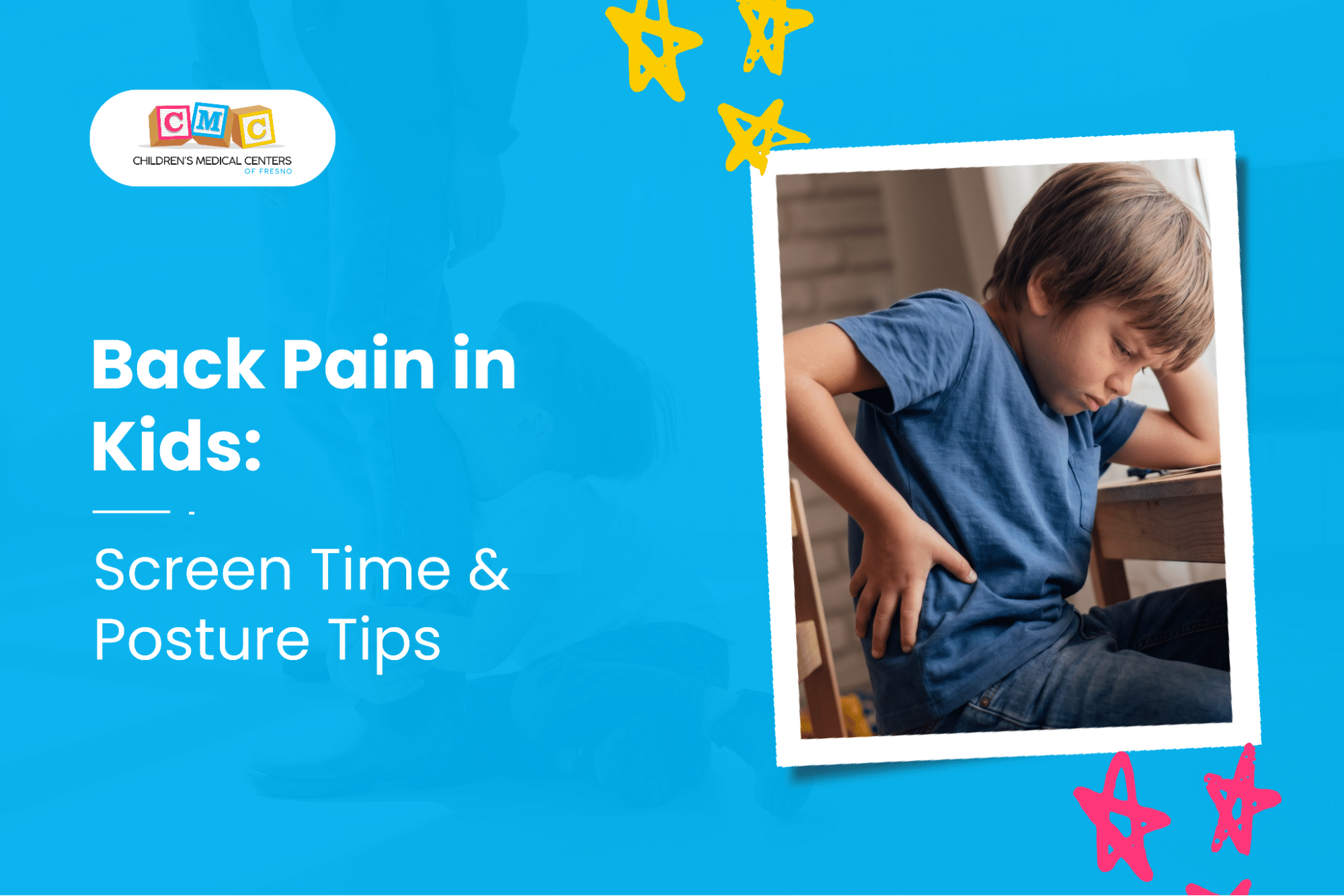
If your child has started complaining about a sore back, it is understandable to feel worried. Many parents assume back pain is something that mainly affects adults, so it can be confusing when a young child mentions discomfort. While occasional soreness can happen after sports, play, or an awkward position, recurring back pain in kids deserves attention.
Screens can be part of the picture. Tablets, laptops, phones, gaming devices, and homework can keep children sitting in the same position for long periods. If a child regularly hunches over a screen or spends much of the day sitting without enough movement, their muscles can become tired and uncomfortable, causing pediatric back pain.
This does not mean every ache is caused by posture or screen use. Back pain can have many causes, including injuries, sports-related strain, and other medical conditions. This guide explains how screen habits and poor posture in children may contribute to discomfort, what parents can do at home, and when it is time to talk with a pediatrician.
Growing Bodies Need Support
CMCFresno is here to help
Is Back Pain in Kids Normal?
Occasional soreness after a busy day of sports, play, or an awkward night’s sleep is usually not a reason to panic. Children can experience muscle soreness and strain just as adults do, particularly after physical activity or unusual exertion.
However, back pain issues that keep coming back deserve more attention. Pain that becomes more severe, limits normal activities, lasts longer than expected, or comes with other symptoms should be evaluated by a healthcare professional.
The cause is not always obvious. A child may have discomfort related to muscle strain, sports activity, posture, an injury, or another condition. Rather than assuming the pain is simply part of growing up, pay attention to when it happens, what makes it better or worse, and whether it affects your child’s normal routine.
How Screen Time May Affect Your Child’s Back
Screens do not automatically cause back problems. The concern is more often how children position their bodies while using them and how long they remain in one position.
A child who repeatedly leans forward over a tablet or laptop may place additional strain on the muscles of the neck, shoulders, and back. Laptops can be especially challenging when the screen and keyboard cannot both be positioned comfortably, encouraging children to hunch forward.
Phone and tablet use can create similar habits when devices are held low in the lap. Over time, staying in one position for extended periods can leave muscles feeling tight or fatigued. This is why encouraging healthy screen habits, not just limiting use, can help reduce these effects.
Movement matters, too. The World Health Organization recommends regular physical activity for children and adolescents and emphasizes reducing sedentary time. Regular activity supports healthy growth, muscle development, and overall physical health.
For practical guidance, parents can also review the American Academy of Pediatrics’ recommendations for creating healthier media habits at home.
Common Signs Your Child’s Posture Needs Attention
Posture changes do not always announce themselves loudly. A child who spends a lot of time sitting may gradually develop habits such as rounding the shoulders, leaning toward a screen, or dropping the head forward.
Watch for physical complaints as well. Frequent neck stiffness, shoulder discomfort, headaches, or a tired feeling in the back may indicate that your child needs more movement or a better-supported workspace.
Behavioral clues can also be useful. A child who constantly shifts position during homework or screen use may be uncomfortable rather than simply distracted.
Quick checklist: signs of posture strain
- Rounded shoulders or a forward-leaning head
- Frequent complaints of neck, shoulder, or back tightness
- Headaches after prolonged screen use
- Frequent shifting while sitting
- Slouching during homework, meals, or car rides
- Difficulty staying comfortable in one position
- Complaints of muscle fatigue after long periods of sitting
8 Simple Posture Tips for Kids
Small changes are usually easier for children to maintain than constant reminders to “sit up straight.” Focus on creating a comfortable environment and encouraging regular movement.
Checklist: 8 posture tips for kids
- Position screens comfortably.Keep a computer screen around eye level so your child does not need to constantly look downward.
- Support the lower back.Choose a chair that allows your child to sit comfortably with their back supported.
- Keep feet supported. Feet should rest flat on the floor or on a footrest when needed.
- Build in movement breaks. Encourage your child to stand, stretch, walk, or change positions regularly.
- Use both backpack straps. Promote activities that strengthen the core and back muscles, such as swimming or yoga.
- Keep backpacks light. The American Academy of Pediatrics recommends keeping a backpack at no more than 15% of a child’s body weight.
- Model healthy habits. Children often copy the way adults sit, move, and take breaks.
Simple Stretches Kids Can Do at Home
Stretching does not need to involve complicated exercises or special equipment. Gentle movement can help children avoid staying in the same position for too long.
For younger children, make movement playful. Older children may prefer a short routine before or after homework.
If a stretch causes pain rather than a gentle feeling of movement, stop the exercise. Children with ongoing or unexplained back pain should be evaluated rather than relying on stretching alone.
| Stretch | How to Do It | Potential Benefit |
|---|
| Cat-Cow | On hands and knees, slowly round and gently extend the back | Encourages gentle spinal movement |
| Chest Opener | Bring the arms behind the body and gently open the chest | Counters prolonged forward positioning |
| Shoulder Rolls | Slowly roll the shoulders backward | Encourages upper-body movement |
| Seated Twist | Sit comfortably and gently rotate the torso from side to side | Encourages spinal mobility |
| Gentle Child’s Pose | Sit back toward the heels and extend the arms forward if comfortable | Provides a gentle back and hip stretch |
When Should Parents Be Concerned?
Most mild discomfort does not automatically mean something serious is happening. However, certain symptoms should not be dismissed as a posture problem.
Talk with your child’s pediatrician if the pain persists, keeps returning, becomes worse, or interferes with normal activities. Medical evaluation is particularly important when back pain occurs alongside symptoms such as fever, unexplained weight loss, numbness, weakness, changes in walking, or pain that wakes your child from sleep.
The American Academy of Family Physicians also notes that children with persistent or complicated low back pain may require further evaluation, particularly when neurological symptoms or other concerning findings are present.
When to seek medical advice:
- Pain that persists or keeps returning
- Pain that becomes increasingly severe
- Pain that wakes your child from sleep
- Back pain with fever or unexplained weight loss
- Numbness, tingling, or weakness
- Changes in walking or movement
- Pain after a significant fall, accident, or sports injury
- A noticeable change in spinal or shoulder alignment
If your child is experiencing severe symptoms or a medical emergency, seek urgent medical care.
How CMCFresno Can Help

When your child’s back pain does not improve, or you are unsure what may be causing it, talking with a pediatrician can give you a clearer next step.
At Children’s Medical Centers of Fresno (CMCFresno), our pediatric team provides care for children from infancy through adolescence. A visit can give parents an opportunity to discuss recurring pain, changes in movement, posture concerns, injuries, or other symptoms with a pediatric provider.
CMCFresno also provides routine well-child exams, which allow pediatric providers to monitor your child’s growth and development and address health concerns as they arise.
Notice a pattern in their pain?
CMCFresno can take a closer look
No. Screen use and prolonged sitting can contribute to muscle strain, but they are not the only possible causes of back pain in children. Sports injuries, falls, muscle strain, and other medical conditions can also cause discomfort.
There is no single number of screen-time hours that determines whether a child will develop back pain. How a child uses the device matters too. Encourage comfortable positioning, regular movement, and a healthy balance between screen-based activities and physical activity.
Poor posture can contribute to muscle strain and discomfort, particularly when a child stays in one position for extended periods. However, parents should not assume that every posture issue will cause permanent spinal problems. Persistent pain should be evaluated to determine its actual cause.
Contact your child's pediatrician if the pain persists, repeatedly returns, gets worse, interferes with normal activities, or occurs with symptoms such as fever, weakness, numbness, changes in walking, unexplained weight loss, or nighttime pain. When you are unsure, a pediatric evaluation can help determine the appropriate next step.

 inquiry@cmcfresno.com
 (559) 455-1500