Hearing the word “scoliosis” for the first time can feel overwhelming for any parent. How serious is it? Will my child need surgery? What can actually help? Physical therapy for scoliosis is often one of the first and most reassuring answers to those worries.
Scoliosis is more common than many families realize, and most cases are mild enough to manage without surgery. Physical therapy plays a central role in that management, helping kids build strength, improve posture, and stay active. It also gives families a clear, proactive plan instead of simply waiting and watching.
This guide brought to you by experts from CMCFresno breaks down what scoliosis is, how it is diagnosed, and how physical therapy fits into treatment. We will also cover bracing, at-home strategies, and signs that surgery may need to be considered. Our goal is to help you feel informed, calm, and ready to support your child.
Notice a Change in Their Posture?
CMCFresno can take a closer look
What Is Scoliosis?
Scoliosis in children refers to an abnormal sideways curve of the spine, rather than the normal front-to-back curves everyone has. Instead of running in a straight vertical line when viewed from behind, the spine bends to one side. Curves are often described using a “C” or “S” shape, depending on their pattern.
Most pediatric scoliosis develops during growth spurts, especially in the years leading up to puberty. This type, called idiopathic scoliosis, has no single known cause. It is not linked to posture, backpacks, or sports. It simply appears as the spine grows, which is why regular checkups during childhood matter so much.
Curves are measured in degrees. How severe that curve is generally falls into mild, moderate, or severe categories. Mild curves often need only monitoring, while moderate curves frequently benefit from scoliosis treatment for children involving therapy or bracing. Severe curves are less common and may eventually require more involved intervention.
Common Signs and Symptoms of Scoliosis
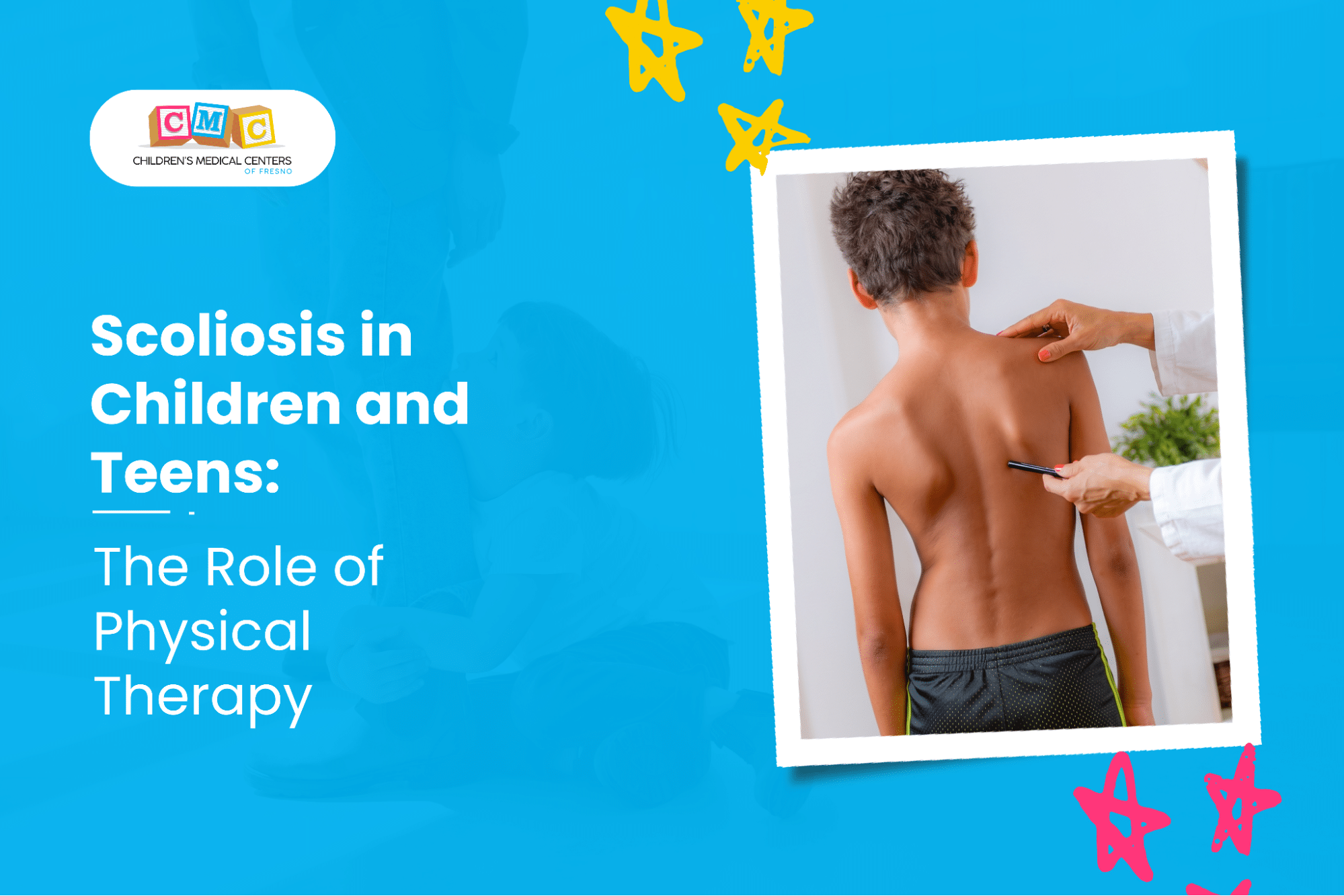
Scoliosis does not usually cause pain in its early stages, which is part of why it can go unnoticed. Instead, the signs tend to be visual, showing up as subtle asymmetries in posture or clothing fit. Parents often notice these details before the child does.
Symptoms can also include uneven shoulders or one hip sitting higher than the other. Some kids show a visible curve in the spine when they bend forward at the waist. Clothes may hang unevenly, or one shoulder blade may stick out more prominently than the other.
Because early signs can be subtle, pediatric checkups can provide opportunities to discuss changes parents notice. Learn more about what families can expect during a well-child exam at CMCFresno.
| Area | Possible Sign |
|---|
| Shoulders | One appears higher than the other |
| Shoulder Blades | One sticks out more than the other |
| Waist | Uneven curve or asymmetry |
| Hips | One hip appears higher |
| Spine | Visible curve when bending forward |
| Clothing | Hems or seams hang unevenly |
How Is Scoliosis Diagnosed?
Diagnosis typically begins with a physical exam, often performed by a pediatrician or during a school screening. The doctor will check for uneven shoulders, hips, and shoulder blades, along with spinal alignment. A simple forward-bend test is one of the most common screening tools used.
If a curve is suspected, the next step is usually an X-ray to measure its exact degree and pattern. This imaging helps doctors classify the curve as mild, moderate, or severe. Keeping up with well-child exams can help you stay on track of your child’s pediatric care.
Planning your child’s pediatric scoliosis therapy depends heavily on these details. Curve size, curve location, and your child’s remaining growth potential all matter for your provider to create a treatment path. This is why follow-up appointments are scheduled regularly, especially during active growth years.
Can Physical Therapy Help Scoliosis?
Can exercises for scoliosis actually make a difference? The honest answer is yes. Physical exercises are particularly for mild to moderate curves. Physical therapy will not reverse a curve entirely, but it can meaningfully support the spine and surrounding muscles.
Therapy focuses on strengthening the muscles that support posture. Stronger supporting muscles help the body manage the curve more effectively and can reduce discomfort. Improved flexibility and body awareness are added benefits that come from consistent therapy work.
For scoliosis in teens, physical therapy often plays an especially important role during growth spurts. Combining therapy with regular monitoring gives families the best chance of catching and managing changes early.
Common Physical Therapy Techniques for Pediatric Scoliosis
Physical therapists use a range of techniques tailored to each child’s specific curve pattern. One well-known approach is the Schroth method. This method uses curve-specific exercises to improve posture and breathing.
Core strengthening is another major focus, since a strong core provides better support for the entire spine. Therapists often include exercises for the back, hips, and shoulders as well. Balance and postural awareness training help kids notice and correct their own alignment throughout the day.
Breathing exercises are sometimes included too. Curves can occasionally affect rib cage movement and lung capacity. Stretching routines round out most programs, targeting tight muscles that may be pulling the spine out of alignment. Every plan is customized, since no two curves respond the same way to treatment.
Physical Therapy and Bracing
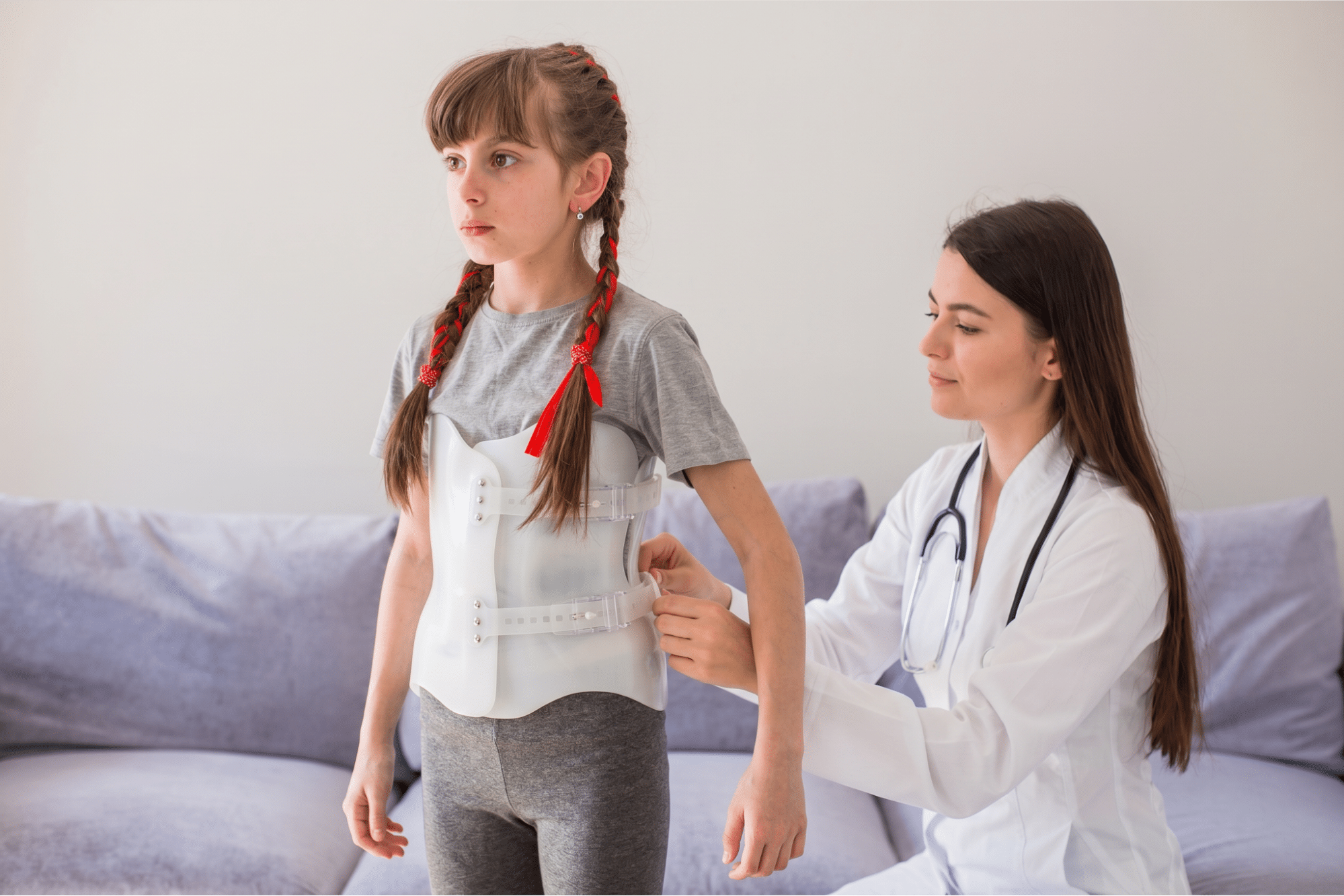
Bracing and physical therapy often work together. A brace helps manage curve progression by providing external support. Physical therapy complements this by strengthening muscles and maintaining flexibility around the brace.
This strategy is a core part of non-surgical scoliosis treatment for many moderate curves. Braces are typically recommended for curves that fall within a specific degree range. It’s also recommended for kids who are still growing. Physical therapy helps prevent muscle weakness that can sometimes develop from long-term brace wear.
Consistency matters greatly with bracing, since it is only effective when worn as prescribed. Physical therapists can help kids adjust to wearing a brace comfortably during daily activities. They also teach exercises specifically designed to be done while the brace is on.
Benefits of Physical Therapy for Children and Teens
Pediatric physical therapy offers benefits that extend well beyond spinal alignment alone. Improved posture is one of the most immediate and noticeable results for most families. Increased strength and flexibility often follow closely behind as therapy continues.
Pain management is another significant benefit, particularly for teens. Better body awareness helps kids notice and correct poor posture on their own throughout the day. This awareness often carries into other areas of life, including sports and everyday movement.
Confidence is a benefit that is easy to overlook but genuinely important for growing kids. Feeling stronger and more in control of their bodies can boost a child’s overall self-esteem. Many families also appreciate having an active, proactive role in their child’s treatment plan.
Key benefits at a glance:
- Improved posture and spinal alignment support
- Increased core, back, and hip strength
- Better flexibility and reduced muscle tightness
- Reduced pain and discomfort for many teens
- Greater body awareness and confidence
- An active, empowering role in treatment
What Happens During a Physical Therapy for Scoliosis Session?
A typical physical therapy for scoliosis session begins with an assessment of posture, strength, and flexibility, especially during early visits. The therapist will observe how your child stands, moves, and holds their spine throughout different activities. This information helps guide exercise selection for that specific session.
Most physical therapy for scoliosis sessions then move into targeted exercises based on the child’s individual curve pattern and needs. These may include core strengthening, stretching, and curve-specific movements like those used in the Schroth method. Therapists closely monitor form throughout, since correct technique matters as much as the exercise itself.
Physical therapy for scoliosis sessions often end with a review of home exercises and any adjustments to the child’s ongoing program. Therapists explain what to practice between visits and how often to repeat each movement. Parents are frequently included in this part of the conversation, especially for younger children.
At-Home Tips to Support Scoliosis Treatment for Children
Consistency between therapy sessions is one of the biggest factors in successful scoliosis management. Simple daily habits can reinforce the work done during physical therapy appointments. These do not need to be complicated to make a meaningful difference over time.
By encouraging your child to move, rather than just sitting down for long periods of time, you support their overall spinal health. Helping your child stick to their home exercise routine, even briefly, adds up significantly over weeks and months. If a brace is part of treatment, supporting consistent wear time is equally important.
Open communication also plays a vital role. Encourage your child to share any new discomfort, fatigue, or brace-related concerns as soon as they arise. The checklist below offers a simple starting point for supporting treatment at home.
At-home support checklist:
- Set a consistent daily time for home exercises
- Encourage regular movement breaks during long sitting periods
- Support full, consistent brace-wear time if prescribed
- Check in regularly about comfort, pain, or fatigue
- Attend all scheduled follow-up and therapy appointments
- Celebrate small progress to keep motivation high
When Is Surgery Considered?
Surgery is generally reserved for severe curves or curves that continue to progress despite other treatments. Doctors typically consider this option when a curve reaches a significant degree, often well beyond what bracing manages effectively. It is far less common than non-surgical approaches for most pediatric cases.
The decision also depends on factors like remaining growth potential and how quickly a curve has been changing. A curve that progresses rapidly during a growth spurt may prompt earlier conversations about surgical options. Curves affecting breathing or causing significant pain are also taken very seriously.
It is important to remember that most scoliosis cases never require surgery at all. There are plenty of non-surgical scoliosis treatments available. Physical therapy and bracing successfully manage the majority of pediatric curves throughout treatment. Surgery, when needed, is typically planned carefully alongside a full medical team.
When Should Parents Seek Medical Care?
Any time you notice signs like uneven shoulders, an uneven waist, or a visible spinal curve, it is worth mentioning to a doctor. Early evaluation allows for earlier treatment, which generally leads to better long-term outcomes. There is no harm in asking a pediatrician to take a closer look for what you might suspect as scoliosis in children.
Rapid changes deserve prompt attention as well, especially during growth spurts in preteens and teens. A curve that seems to be worsening quickly should not wait until the next scheduled checkup. Contacting your child’s doctor sooner rather than later is always the safer choice.
New symptoms like back pain, breathing difficulty, or numbness also warrant a timely medical visit. These are less common with typical idiopathic scoliosis and may point to something needing closer investigation. It’s always important to trust your instincts as a parent.
Find the Best Scoliosis Care at CMCFresno
Scoliosis can feel like an intimidating diagnosis, but most children and teens manage it very well over time. Physical pediatric scoliosis therapy plays a central, empowering role in that management for the majority of families. It builds strength, supports posture, and helps kids stay active and confident.
Combined with monitoring and bracing when needed, pediatric physical therapy offers a well-rounded, non-surgical path forward for most curves. Surgery remains a less common option, reserved mainly for more severe or rapidly progressing cases. Staying engaged with your child’s care team gives you the clearest picture at every stage.
At Children’s Medical Centers of Fresno (CMCFresno), our pediatric team provides care for children from infancy through adolescence. A pediatric visit gives parents an opportunity to discuss changes in posture, movement, growth, pain, or other concerns with a healthcare provider.
With consistent support at home and in therapy, most kids continue to run, play, and grow with confidence. Scoliosis is a part of their journey, but it does not have to define it. Staying informed and proactive is one of the best gifts you can offer your child.
The Right Care Starts with a Conversation
CMCFresno can help you begin
FAQs
Physical therapy does not cure scoliosis or fully straighten the spine on its own. It does help manage the curve, strengthen supporting muscles, and reduce discomfort significantly. For many mild to moderate cases, it is a highly effective part of overall treatment.
Frequency varies based on curve severity, age, and the specific treatment plan recommended. Some kids attend weekly sessions, while others focus mainly on a structured home exercise routine. Your child's physical therapist will tailor a schedule that fits their individual needs.
No, bracing depends on curve size, location, and how much growth remains for your child. Many mild curves are managed with physical therapy and monitoring alone. When bracing is recommended, therapy is typically used alongside it for added support.
Yes, most kids continue sports, play, and daily activities throughout their treatment. Physical therapy is designed to support an active lifestyle rather than restrict it. Your care team can offer specific guidance based on your child's curve and treatment plan.
 inquiry@cmcfresno.com
 (559) 455-1500