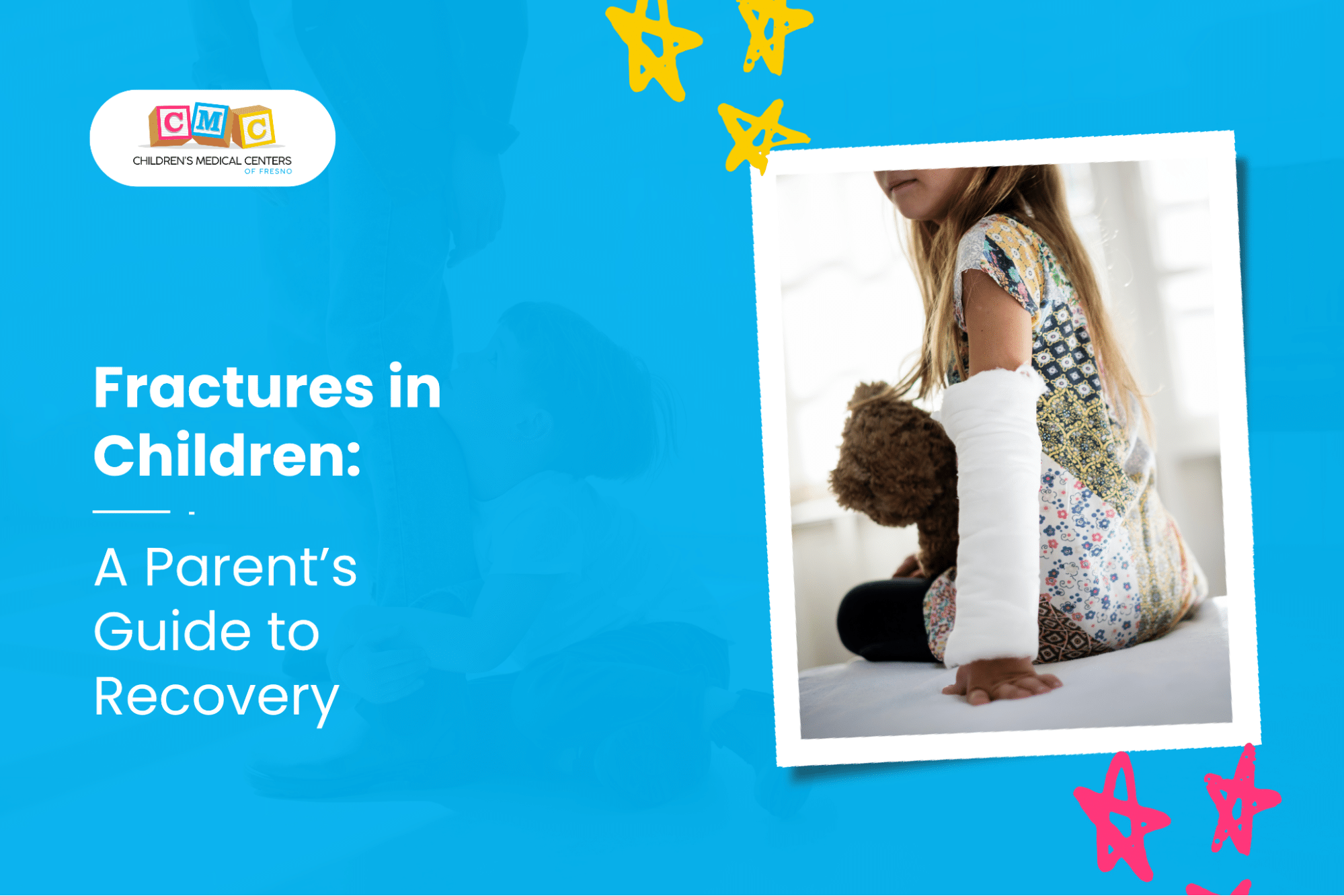
You heard the cry from across the yard, and your heart dropped before you even reached your child. Maybe you drove to the clinic with a thousand questions racing through your mind. Now there is a cast, a care plan, and a little one who is counting on you.
Here is something worth holding onto as you begin this journey. Fractures in children are common, and growing bones are built to heal. Your child’s body is already hard at work repairing itself.
At CMC Fresno, we understand how much you want to do this right. This guide walks you through what to expect, from the first days after the injury to returning to school, play, and sports.
Concerned about your child’s fracture recovery?
Schedule a pediatric visit today
How Do Fractures in Children Heal?
Your child’s bones are more flexible than adult bones and have a thick, active layer called the periosteum. This layer supplies blood and healing cells to the injury, helping pediatric fractures heal.
Healing happens in overlapping stages. During the first few days, a blood clot forms around the break, and swelling may peak. Over the next one to three weeks, soft tissue called a callus begins connecting the broken ends. Between about two and six weeks, the callus hardens into new bone.
The final stage is remodeling, which can continue for months. During this time, the bone gradually reshapes itself. Children can often correct small changes in bone alignment as they grow.
Your child also has growth plates near the ends of long bones. If a fracture occurs near one, our CMCFresno doctors may recommend additional follow-up to monitor healing and growth. You can learn more about growth plate fractures from the American Academy of Orthopaedic Surgeons.
How Long Do Pediatric Fractures Take to Heal?
Most heal in about three to eight weeks. That window may feel long right now, but it often passes faster than parents expect. Your child’s doctor will tailor the timeline to their specific injury and progress.
A few things shape how quickly your child heals. Younger children tend to heal fastest. Arm fractures often heal faster than leg fractures. The type of break, the treatment, and your child’s overall health also make a difference.
| Common Fracture | Typical Immobilization Time* |
|---|
| Buckle (torus) wrist fracture | 3 to 4 weeks |
| Forearm fracture | 4 to 8 weeks |
| Collarbone fracture | 3 to 6 weeks |
| Elbow fracture | 3 to 6 weeks |
| Lower leg (tibia) fracture | 6 to 10 weeks |
| Toddler’s fracture | 3 to 4 weeks |
*These are general ranges, and your child’s timeline may differ.
If you are wondering whether an injury could be a fracture, common symptoms of fractures include pain with movement, swelling, bruising, or a limb that looks bent or out of place. Some children may simply stop using an arm or refuse to put weight on a leg.
What to Expect During Children’s Fracture Recovery
Children’s fracture recovery moves through phases, and each one looks a little different. The first two weeks usually bring the most pain and swelling. Keeping the limb raised, letting your child rest, and giving the pain relief your doctor recommends will ease them through it.
As healing progresses, your child may feel better but become frustrated by restrictions. Boredom, itching, and grumpiness are common. Books, puzzles, crafts, and movie nights can make this period easier.
Cast care is another important part of recovery. Keep the cast dry unless it is designed to get wet, and discourage your child from putting objects inside it to scratch. Check fingers or toes regularly for changes in color, warmth, sensation, or movement.
When the cast comes off, the injured limb may look thinner or have dry, pale skin. And that’s completely normal. Stiffness is also common after weeks of limited movement. These changes usually improve as your child gradually returns to normal activity.
When Can Kids Return to School, Play, and Sports After a Fracture?
Fracture recovery in kids happens in small, steady steps. Most children are back in the classroom within a few days, once their pain is under control. Sports and rough play come later, after your doctor gives the green light related to sports physical services.
| Activity | General Timing* | Notes |
|---|
| School | Often within 1 to 3 days | May need help writing or carrying bags |
| Quiet play | Once pain is controlled | Reading, crafts, and board games |
| Recess and light play | After doctor approval | Avoid climbing while in a cast |
| Gym class | Usually after cast removal | May need modified activity |
| Non-contact sports | Often 2 to 4 weeks after cast removal | Swimming, running, cycling |
| Contact sports | Often 4 to 8 weeks after cast removal | Football, basketball, gymnastics |
*Always follow your child’s doctor’s guidance.
A quick note to your child’s teacher can make school feel much easier. Ask about extra time on assignments, an elevator pass, or a second set of books at home. Small changes like these help your child feel included instead of left out.
If your child is itching to get back on the field, you are not alone. You might explain that waiting now protects the bone and keeps them playing all season long. Hearing it from you, in a calm and caring voice, helps them trust the process.
During fracture recovery in kids, returning to normal activities is usually gradual. Your child’s doctor can help you understand when each activity is appropriate based on healing and strength.
How Can Parents Support Fracture Recovery in Kids?
Much of your child’s pediatric fracture treatment happens right at home, with you. The care you give between appointments truly shapes how well they heal. By following the plan, you are already giving your child a strong start.
Ease back into activity slowly, adding a bit more each day. If your child mentions pain, or you notice swelling or tiredness, simply scale back and try again later. Gentle range-of-motion exercises, if your doctor suggests them, help loosen stiff joints.
What your child eats matters too. Calcium, vitamin D, and protein give healing bones the building blocks they need. The NIH offers easy-to-read fact sheets on calcium and vitamin D.
Return-to-Play Readiness Checklist
- Your child’s doctor has cleared them for activity
- No pain at rest or during daily tasks
- Full or near-full range of motion
- Strength close to the uninjured side
- Able to run, jump, or grip without limping
- Your child feels confident and ready
Your child may still feel nervous about returning to an activity they enjoyed before the injury. Encourage small steps and let their confidence build gradually.
How Do You Know When Your Child Is Ready for Activity?
A healed bone does not always mean a body that is fully ready to play. Kids often want to rush back, and you are the one who can gently slow things down. Knowing what to watch for makes that decision much easier.
Pay attention if your child has pain during or after activity, limps, or favors the injured limb. Swelling that returns after play is a sign the bone would benefit from more rest. Weakness, stiffness, or pain that wakes your child at night are worth noting too.
Children do not always speak up when something hurts, especially when they are having fun. You may notice it instead in how they move, guard the limb, or avoid certain motions. If your usually chatty child is quiet after practice, a gentle check-in can help.
These may overlap with common symptoms of fractures, particularly if your child has experienced another fall or impact. A new injury should be evaluated rather than assumed to be part of normal healing.
If these concerns appear, pause the activity and contact your child’s doctor for guidance. New pain after another fall or impact may also warrant an evaluation, particularly if you notice symptoms of fractures.
When Should You Call the Doctor During Fracture Recovery?
Most children recover without major problems, but some symptoms need prompt medical attention.
Seek care right away if your child’s fingers or toes become blue, pale, cold, or numb. Severe pain that does not improve with recommended medicine, a new deformity, or an inability to move the fingers or toes also requires immediate attention.
Call your child’s doctor about a cast that feels too tight or loose, becomes cracked or wet, or causes increasing irritation. A bad smell, drainage, or pain that returns after cast removal should also be evaluated.
Severe pain combined with numbness can be a sign of compartment syndrome, a rare but serious emergency. If your child also experiences a head injury, the CDC’s HEADS UP program provides parent-friendly information about concussion symptoms.
How Can You Help Prevent Future Fractures?
You cannot prevent every childhood injury, but a few habits can reduce the risk of serious falls and impacts. Make sure helmets and other protective equipment fit correctly and are appropriate for your child’s activity.
Running, jumping, and other weight-bearing activities help support healthy bones. Calcium-rich foods, adequate vitamin D, and regular physical activity also contribute to bone health.
At home, look for potential fall hazards such as unsecured rugs, unguarded stairs, or unsafe play areas. For additional child safety guidance, visit HealthyChildren.org from the American Academy of Pediatrics.
Supporting Your Child Through Pediatric Fracture Recovery

The days after a fracture can feel long, especially when your child is sore or frustrated. Yet with each passing week, you will see them get a little stronger and a little more like themselves. Before long, the cast will be a story they tell their friends.
You are already doing what matters most by learning, watching, and caring. Following the plan, easing back into activity, and noticing when your child needs rest will carry them through. Your steady presence is one of the most powerful parts of their healing.
At CMCFresno, we are here to support your family throughout that process. From evaluation and treatment to follow-up care, our pediatric team can help you understand what your child needs at each stage.
Need guidance after your child’s fracture?
Talk with our pediatric care team
Yes, your child's bones generally heal faster than an adult's would. Their thick periosteum and ongoing growth give them extra healing power. Their bones can even straighten and reshape themselves over time.
Some minor fractures heal well with a removable splint instead of a cast. Buckle fractures of the wrist are a common example. Your child's doctor will choose the option that fits their injury best.
Stiffness is expected after a joint and its muscles rest for several weeks. It does not mean anything went wrong with healing. Most children move freely again within a few weeks of normal use.
Most growth plate fractures heal without any lasting effect on growth. Your doctor may schedule follow-up visits to make sure the bone keeps growing normally. Keeping those appointments helps catch any concerns early.
Swimming is only safe with a waterproof cast and your doctor's approval. Standard casts need to stay dry to protect the skin underneath. Ask your care team which type your child has before planning pool time.
 inquiry@cmcfresno.com
 (559) 455-1500