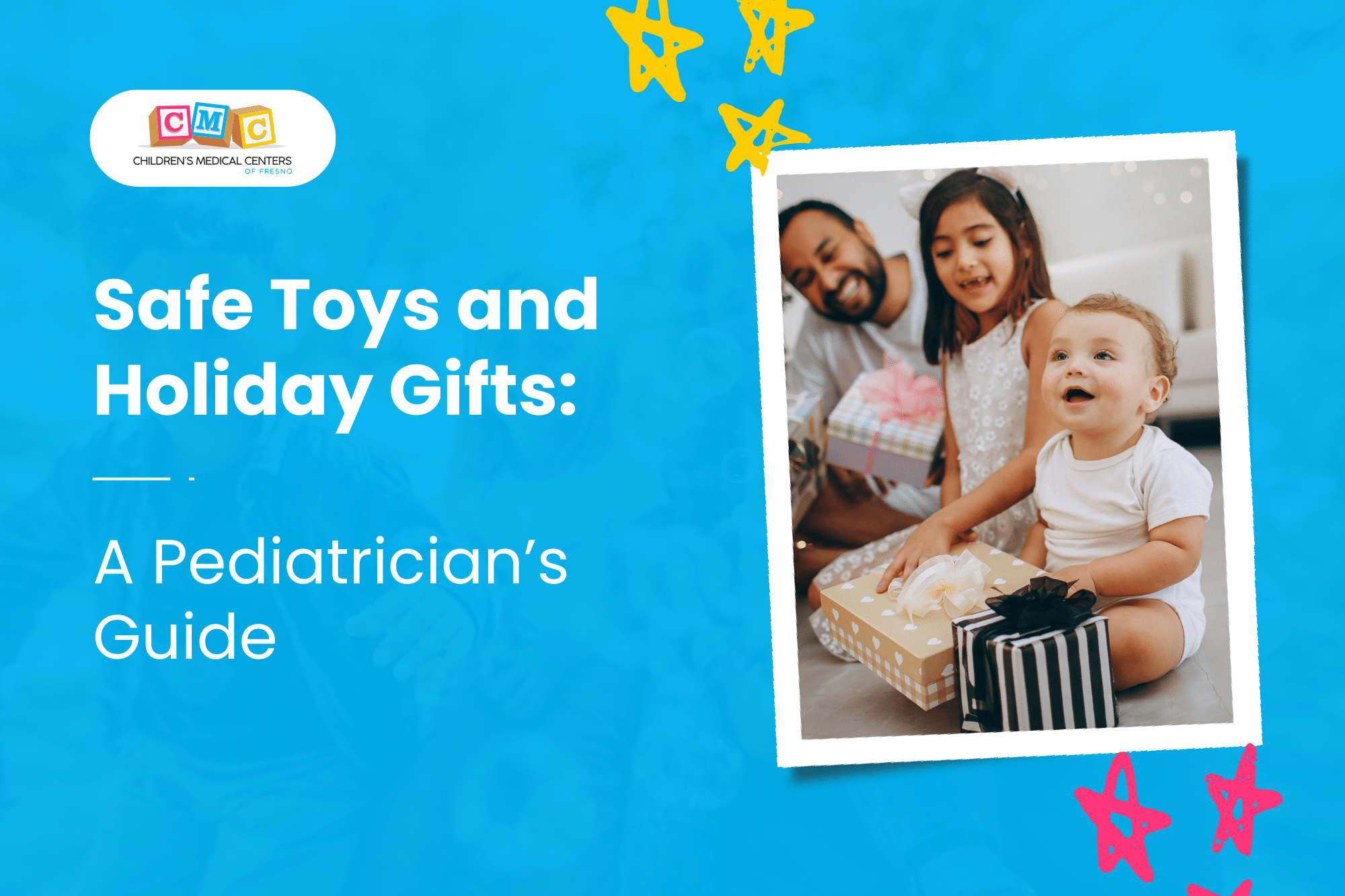
The holidays are a magical time for families, filled with excitement, laughter, and the joy of watching your child unwrap a special gift. This pediatricians guide is designed to help families enjoy the season safely, from carefully planned wish lists to last-minute surprises, since getting toy gifts is a big part of what makes the holidays so memorable.
However, not every toy is safe for every child. Each year, many children are treated in emergency rooms for toy-related injuries, often due to choking hazards or small parts. That’s why parents should always remember toy safety while shopping to prevent accidents and keep playtime worry-free.
The good news is that safe toys can still be fun, engaging, and full of holiday magic. Smart, age-appropriate choices make playtime safe and supportive of growth and development. Here’s what our experts at CMCFresno recommend for toy safety, helping you have a joyful and safe holiday season.
Start Your Holiday Safety Checklist
Why Toy Safety Matters
Once they open the gifts and playtime begins, toys quickly become part of your child’s daily routine. That is why toy safety still matters long after the holidays end. As pediatricians, we often see how easily a fun moment can turn into a preventable injury when a toy is not age- or development-appropriate.
Many children end up in emergency rooms due to toy-related injuries, often linked to overlooked hazards or toys that fail to follow established toy safety standards. Being aware of these risks helps parents like you make safer, more confident choices during the busy holiday season and beyond.
The most common toy safety concerns include:
- Choking hazards, such as small or loose parts.
- Sharp edges or fragile materials that can cause injuries.
- Toxic materials, including unsafe paints or plastics.
- Button batteries and strong magnets, which pose serious risks if swallowed.
Having safe toys also supports healthy growth and development. Age-appropriate toys, for example, help children build motor skills, problem-solving abilities, and confidence while keeping playtime risk-free and enjoyable.
Choosing Age-Appropriate Toys
The right toy for their age helps children learn, explore, and grow — all while supporting a happy childhood. As one of the most important toy safety guidelines to keep in mind, age recommendations on labels help you find the perfect toy for your child’s stage in life.
Here’s a simple guide for choosing age-appropriate toys:
- Infants (0–12 months): Choose soft, durable materials with no small parts. Prioritize sensory toys that engage sight, sound, and touch.
- Toddlers (1–3 years): Opt for sturdy push/pull toys, large blocks, and simple ride-ons to encourage motor skill development.
- Preschool (3–5 years): Shop for pretend play sets, non-toxic art supplies, and puzzles to boost creativity and problem-solving.
- School-age kids (6–12 years): STEM kits, sports gear, and craft projects support learning and physical activity. Make sure to include safety equipment when necessary.
Age labels (like 3+ or 6+ ) are there to protect younger children from hazards. If you have kids of different ages at home, you should separate toys or create designated play areas. Your thoughtful choices can go a long way in ensuring your child enjoys safe playtimes while keeping up with growth and development.
Safety Red Flags: What Parents Should Avoid
Even age-appropriate toys aren’t completely hazard-free. You should still keep an eye out for red flags while you shop for safe toys (and even during playtime).
Here are some common toy hazards to watch out for:
- Choking hazards: Steer clear of small pieces, marbles, tiny figurines, and detachable parts.
- High-powered magnets and lithium coin batteries: These objects are extremely dangerous if swallowed.
- Long strings, cords, or sharp edges: These materials can lead to strangulation or cuts.
- Cheap or counterfeit toys: Cheaper knockoffs often have poor build quality and unsafe materials. Always choose those with ASTM-certified or CE-marked labels.
- Noisy toys: Loud toys can damage hearing, especially in young children.
- Toxic materials: Choose BPA-free, non-toxic toys and check safety labels carefully.
Toy Gifts That Support Healthy Development
The right toys help children grow, learn, and reach key developmental milestones. When you choose developmental toys by age, playtimes become much more supportive of creativity, problem-solving, and motor skill development.
Consider these gift ideas:
- Building sets: Boost problem-solving, spatial awareness, and fine motor skills.
- Art materials: Crayons, paints, and craft kits encourage creativity and hand-eye coordination.
- Balls and sports equipment: These can support balance, coordination, and active play.
- STEM and science kits: Inspire curiosity and critical thinking.
- Musical instruments: Promote rhythm, auditory skills, and self-expression.
When to Seek Help: Signs of Toy-Related Injuries
Even with safe toys and careful moderation, accidents can still happen. Recognize the signs, know when to act quickly, and get the expert help your child needs.
Watch for these choking signs:
- Gagging, coughing, or difficulty breathing
- Wheezing or high-pitched noises
- Inability to speak, cry, or swallow normally
- Blue lips or face
If your child swallows a button battery or a high-powered magnet, it is an emergency. Call 911 immediately. Do not induce vomiting.
For persistent pain, cuts, or swallowing any dangerous object, contact your pediatrician (visit CMCFresno). Timely care can prevent complications and help your child recover in no time.
Make the Holiday Season Safe and Fun for Your Little Ones

The holiday season is the perfect time for creating joyful memories with your little ones. When you choose toys thoughtfully and encourage mindful play, your child won’t miss out on the precious moments of fun and learning in the early years of life. Following simple toy safety tips, like checking age recommendations and avoiding common hazards, makes a big difference in keeping playtime safe and worry-free.
At CMCFresno, we’re here year-round to support your family’s health and safety. Whether you have questions about age-appropriate toys, want guidance on safe play, or need a routine checkup, our pediatric team is ready to help. Schedule a visit or reach out today to make this holiday season both magical and safe for your child.
Discover Safe and Fun Gift Ideas
Safe Toys and Holiday Gifts Pediatrician’s Guide FAQs
Yes, as long as you inspect them carefully. Check for broken parts, worn edges, or missing safety labels. Stay away from toys that no longer meet current safety standards. Always choose toys appropriate for your child’s age.
Look for labels like BPA-free, phthalate-free, non-toxic paint, or ASTM certification. When in doubt, check the manufacturer’s website for safety documentation or reports about recalls.
Not always. Some sensory toys contain small beads, liquid, or magnets. Always check the age recommendation and inspect for potential choking hazards or breakable parts.
Toys that make noises above 85 decibels can damage hearing over time, especially if played close to the ear. Always test sound levels and limit playtime with noisy toys.
 inquiry@cmcfresno.com
 (559) 455-1500