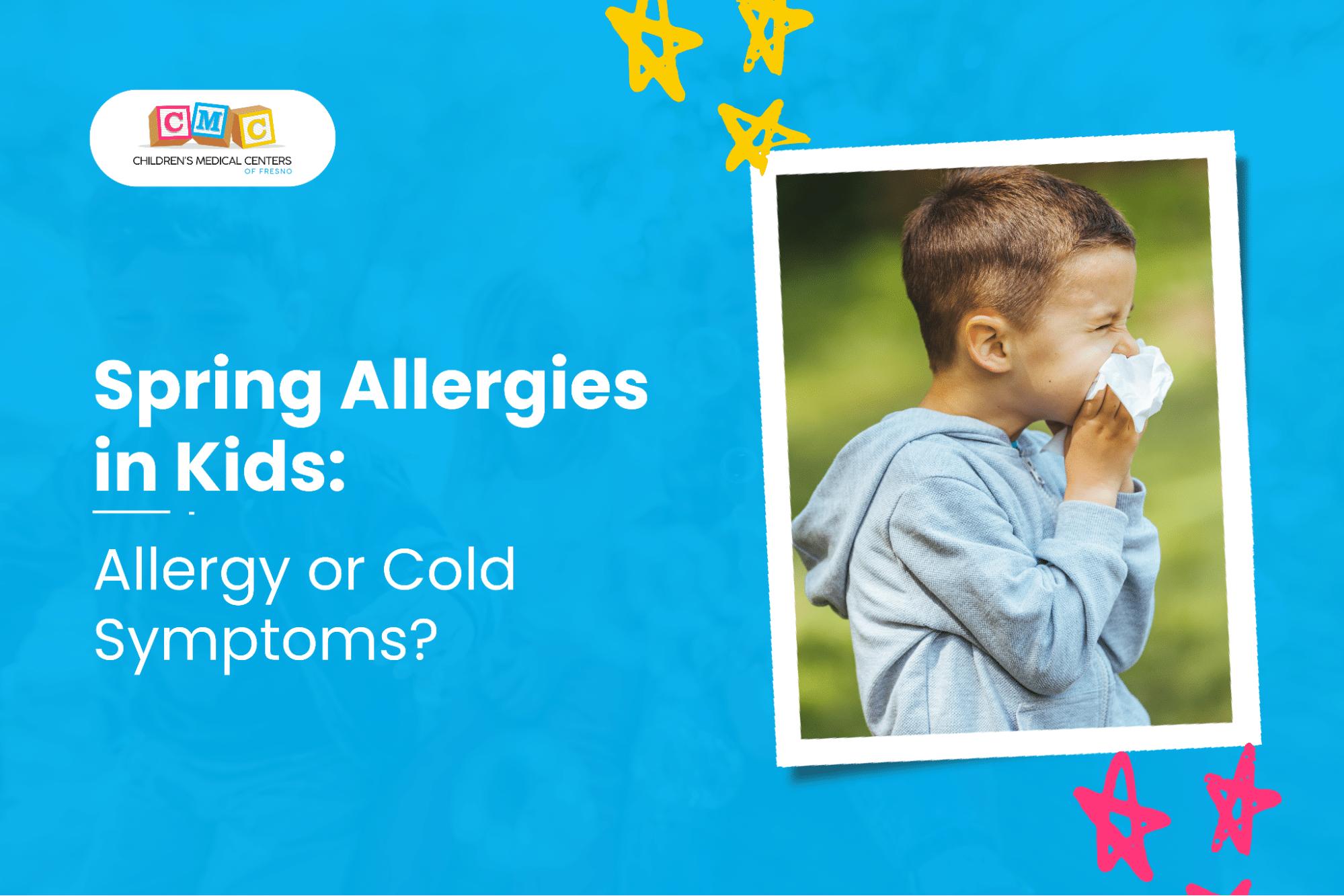
Spring brings colorful fields of newly blossomed flowers and the happy chirping of birds basking in the abundant pollen. But as parents, we already know something else lurking in the shadows… symptoms that can either be due to allergies or a developing common cold.
Once your child starts sniffling or coughing, it’s natural for alarm bells to go off. While allergies and common colds can look very similar at first, knowing the difference can help you respond early and give your child the right kind of care. From itchy eyes and nonstop sneezing to fever and fatigue, certain signs can point you in the right direction.
At CMCFresno, we understand how stressful it can be when your child isn’t feeling their best. Our compassionate pediatric care team is here to help families find answers, manage symptoms, and keep your kids healthy through every season. Whether it’s spring allergies, a lingering cold, or something in between, we’re committed to providing the trusted care your child deserves.
Sniffles or Sneezes? Let’s Find the Cause.
Book a Visit Today
Spotting the Difference in Your Child
When sneezing, coughing, and runny noses start showing up, it can be difficult to tell whether your child is dealing with seasonal allergies or the beginning of a common cold. While the symptoms may overlap, there are a few key differences that can help parents better understand what’s causing their child’s discomfort and when it may be time to seek medical care.
Cold Symptoms in Children
Colds are very common in children and are usually caused by viral infections that spread easily through everyday contact at school, daycare, playgrounds, or even from shared toys and surfaces at home. Because kids are still building up their immune systems and are often in close contact with others, it is normal for them to catch several colds a year.
Cold Symptom Checklist
- Runny or stuffy nose
- Sneezing
- Coughing (mild to persistent)
- Sore throat
- Low-grade fever
- Fatigue or low energy
- Irritability or fussiness
- Reduced appetite
- Mild body aches (in some cases)
These symptoms usually start gradually and may last around 7 to 10 days before improving on their own as the body fights off the virus.
Spring Allergies in Children
Spring allergies happen when a child’s immune system overreacts to harmless substances in the environment, such as pollen from trees, grass, and flowers. During spring allergy season, these allergens are more common in the air, especially outdoors at parks, playgrounds, and even through open windows at home. For many children, spring allergy symptoms tend to return around the same time each year when pollen levels rise.
Allergy Symptom Checklist
- Frequent sneezing
- Runny nose with clear mucus
- Itchy, watery, or red eyes
- Itchy nose or throat
- Nasal congestion or stuffiness
- Cough caused by postnasal drip
- Dark circles under the eyes (allergy shiners)
- Symptoms that worsen outdoors
- No fever present
Unlike colds, spring allergies can last for weeks or even months as long as exposure to allergens continues, which is why identifying triggers early can help make your child more comfortable throughout the season.
Here is a quick guide to help you tell the difference between cold and allergy symptoms in children.
Common Cold vs Allergies in Children
| Symptom / Feature | Common Cold | Spring Allergies |
|---|
| Onset | Gradual | Sudden or seasonal |
| Duration | 7 to 10 days | Weeks to months |
| Fever | Common (low-grade) | Not present |
| Sneezing | Common | Very common, frequent |
| Runny nose | Thick or yellowish mucus | Clear, watery mucus |
| Cough | Common, may worsen over time | Often mild, from postnasal drip |
| Itchy eyes or nose | Rare | Very common |
| Fatigue | Common | Sometimes mild |
| Body aches | Sometimes present | Not present |
| Triggers | Viral infection (person-to-person spread) | Pollen, dust, outdoor allergens |
| Pattern | Happens anytime | Often seasonal, recurring yearly |
How to Treat Allergies and Colds in Children
When your child starts sneezing, coughing, or feeling under the weather, it can be hard to know whether you are dealing with a common cold or seasonal allergies. While they can look similar at first, the way you manage and treat each one is a little different, and the right approach can help your child feel better faster.
How to Treat Allergies in Children
- Limit exposure to triggers Keep windows closed during high pollen days and avoid outdoor play when pollen counts are high.
- Encourage daily washing Have your child wash their hands, face, and hair after being outdoors to remove pollen.
- Use saline nasal rinses Saline sprays or rinses can help clear allergens from the nasal passages and reduce congestion.
- Try over-the-counter allergy relief if advised Antihistamines may help reduce sneezing, itching, and a runny nose. Always follow pediatric guidance.
- Keep indoor air clean Use air filters and regularly clean surfaces to reduce dust and allergens inside the home.
How to Treat Colds in Children
- Focus on rest and recovery Encourage plenty of sleep so the immune system can fight off the virus.
- Keep them hydrated Offer water, warm fluids, or electrolyte drinks to ease congestion and prevent dehydration.
- Relieve symptoms gently Use saline drops, a humidifier, or gentle suction for nasal congestion.
- Manage fever and discomfort if needed Fever reducers may help, but always use child-appropriate dosing and consult a doctor when unsure.
- Let it run its course Most colds improve on their own within a week to 10 days, so comfort care is usually the main approach.
With the right care at home and a closer look at their symptoms, parents can often tell what’s going on and respond more confidently.
Next, let’s look at when it may be time to seek medical advice and how to know if your child’s symptoms need a professional evaluation.
Helping Your Child Feel Better: Managing Allergies and Colds
When your child is uncomfortable, the priority is always relief and comfort. While seasonal allergies and common colds can share similar symptoms like sneezing, congestion, and coughing, each requires a slightly different approach. Understanding how to manage both can help ease symptoms at home and support a smoother recovery.
Treating Seasonal Allergy Symptoms in Children
Seasonal allergies are best managed by reducing exposure to triggers and easing the body’s reaction to allergens like pollen, dust, and mold.
Start by limiting outdoor exposure during high pollen days, especially in the morning when levels are highest. After being outside, encourage your child to wash their hands, face, and hair to remove lingering allergens. Keeping windows closed and using air filtration indoors can also help reduce irritants in the home.
Saline nasal sprays can provide gentle relief by clearing allergens from the nasal passages. If symptoms persist, pediatrician-recommended antihistamines may help reduce sneezing, itching, and a runny nose. Consistency is key, especially during peak allergy seasons.
Treating Common Cold Symptoms in Children
Colds are caused by viruses, so treatment focuses on comfort while the body naturally fights off the infection.
Make sure your child gets plenty of rest, as sleep helps the immune system recover. Keep them well-hydrated with water, warm broths, or electrolyte drinks to soothe the throat and loosen congestion. A humidifier can also help ease breathing, especially at night.
For nasal congestion, saline drops or gentle suction can provide relief. Fever or discomfort can be managed with child-appropriate medications if needed, but always follow dosing instructions or consult a healthcare provider.
Most colds improve on their own within a week to 10 days, so supportive care and patience are often the most effective approach.
When to See Your Pediatrician
It’s completely normal to feel unsure when your child is sick, especially when symptoms like sneezing, coughing, or congestion can look so similar. Most of the time, these illnesses are mild and improve with rest and home care, but there are moments when your child may need a closer look from a pediatrician for peace of mind and proper treatment.
Signs Your Child May Need Medical Care
- Breathing difficulty such as fast, strained, or noisy breathing
- Fever that is high or lasts more than 3 days
- Symptoms lasting longer than 10 to 14 days without improvement
- Symptoms that are getting worse instead of better
- Cough that persists or interferes with sleep and daily activities
- Congestion that makes it hard to eat, drink, or sleep comfortably
- Signs of dehydration such as dry lips, no tears, or reduced urination
- Unusual fatigue, low energy, or difficulty staying alert
- Allergy symptoms that disrupt sleep, school, or play
- No improvement despite appropriate home care or medications
Paying attention to these warning signs can help ensure your child gets the right care at the right time, giving you greater peace of mind throughout allergy and cold season.
Supporting Your Child Through Every Season

Seasonal sniffles can leave parents with a lot of questions, especially when allergies and colds share so many of the same symptoms. While many cases improve with rest and home care, knowing you have reliable medical support can bring comfort and clarity during uncertain moments.
Every child experiences symptoms differently, which is why personalized care matters. Whether your child needs help managing seasonal allergies, recovering from a cold, or simply getting evaluated for lingering symptoms, early guidance can help families feel more confident about the next steps.
At CMCFresno, we are proud to support children and families with compassionate pediatric care throughout every season. Our team is here to provide trusted guidance, attentive treatment, and a welcoming environment focused on helping your child feel healthy, comfortable, and cared for.
Healthy Kids, Happier Days
Book an Appointment Now
It can be worrying to see your child constantly sneezing. During spring allergy season, pollen in the air can trigger symptoms like sneezing, itchy eyes, and congestion in sensitive children.
It is not always easy to tell at first. Common colds often come with fever and tiredness, while spring allergies usually cause itchy eyes and repeated sneezing without fever.
Most common cold symptoms improve within 7 to 10 days, but it can feel longer when your child is uncomfortable or having trouble resting.
Yes, spring allergies can make it harder for children to sleep well, which may leave them more tired, irritable, or uncomfortable during the day.
If symptoms are not improving, seem to be getting worse, or are affecting your child’s breathing, sleep, or daily comfort, it is a good idea to have them checked.
 inquiry@cmcfresno.com
 (559) 455-1500