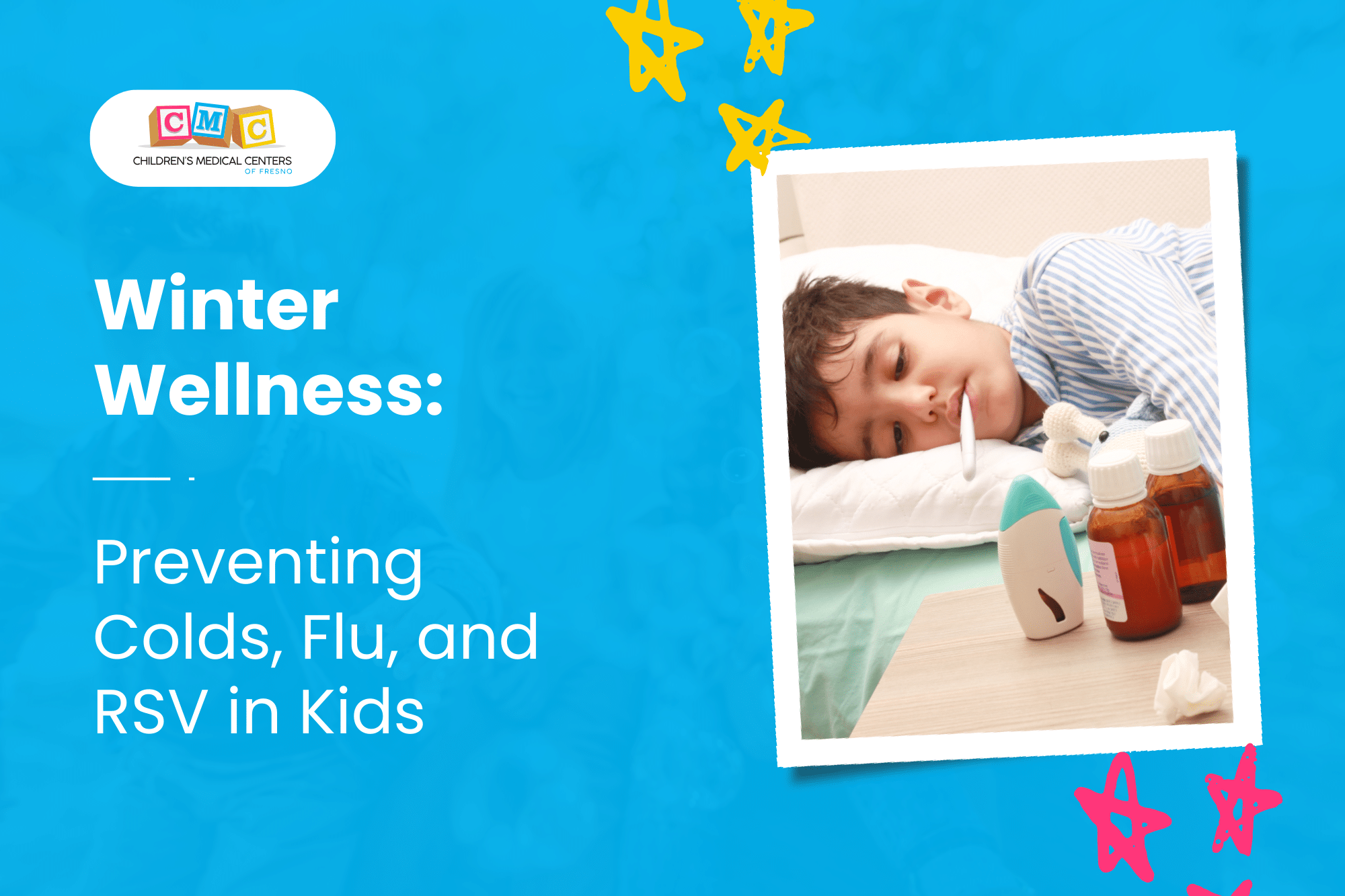
The first snowfall of winter is always magical, but for parents, it can also signal the start of their kids’ sniffles, coughs, and fevers. Watching your little one tug at their blanket, feeling woozy and not their usual self, can spark endless worry. The good news is that with the right winter wellness strategies, you can help your child stay healthy and skip the sick days this season.
Colds, flu, and respiratory syncytial virus (RSV) tend to spread more easily during the colder months. It’s important to carefully watch for flu or RSV symptoms, as these infections sometimes lead to more serious complications, especially for babies, toddlers, and children with asthma or other health concerns.
At CMCFresno, we’re here to guide you through winter wellness. From vaccinations to everyday prevention tips, our pediatric team helps families keep kids healthy, happy, and ready to enjoy every winter moment.
Understanding the Big Three: Colds, Flu, and RSV
Winter brings more than chilly weather! You’ll hear and see more sniffles, coughs, and fevers this time of the year, and these symptoms can come from different causes. Knowing the differences between colds, flu, and RSV can help you spot symptoms early, address them, and keep your child comfortable.
The Common Cold
Colds are usually mild but can still disrupt your child’s day-to-day activities. Watch for common signs of a cold, such as:
- Runny or stuffy nose
- Sneezing and mild cough
- Low-grade fever or fatigue
Colds spread through touch, droplets, and shared items. Most resolve in about a week, but can make sleep and play uncomfortable.
Influenza (Flu)
Flu symptoms are more intense and can appear quickly:
- High fever and body aches
- Persistent cough and sore throat
- Fatigue, sometimes vomiting or diarrhea
Flu peaks in winter because the virus survives longer in cold, dry air. Kids under five, those with asthma, or those with weaker immunity are at higher risk, making vaccination and early care especially important.
Respiratory Syncytial Virus (RSV)
RSV is mild in older kids but can be serious for infants. Watch for severe RSV signs like:
- Wheezing or trouble breathing
- Rapid or shallow breaths
- Persistent cough or dehydration
RSV surges in winter due to close indoor contact. Early recognition and care are key, especially for babies or vulnerable children.
Why Kids Get Sick More Often in Winter
Most parents have probably wondered why kids catch colds, flu, and RSV more often in winter, a question we hear every year in our clinic. During RSV season, several factors make this season trickier for kids’ immune systems — but most risks are manageable with simple, healthy habits.
What Makes Winter Riskier
- Dry indoor air: Heating dries out air and mucus, making it easier for viruses to enter.
- Close contact indoors: Schools, daycare, and playdates increase exposure to germs.
- Weaker immune response: Younger children are still building immunity.
- Less sunlight and more stress: Shorter days and winter routines can slightly lower resistance.
Understanding these factors helps you adjust routines and focus on simple habits that boost your child’s immunity and reduce illness risk as the season passes.
Everyday Prevention Strategies for Families
Protecting kids from viruses and keeping your home healthier during winter can sound daunting, but it’s surprisingly simple. Small daily habits can strengthen immunity, reduce germ exposure, and aid in preventing RSV infection.
Here are some easy habits your family can follow:
- Handwashing: Wash hands for at least 20 seconds with soap and water, especially before meals, after using the restroom, or after playing.
- Respiratory etiquette: Teach kids to cough or sneeze into their elbow, not their hands.
- Hydration and nutrition: Offer water, fruits, and vegetables to support immunity.
- Sleep routines: Consistent bedtimes help the body fight infections and recover faster.
- Humidifiers: Moist indoor air soothes noses and throats, helping prevent infections.
- Clean frequently touched items: Wipe toys, doorknobs, and devices regularly to remove germs sticking to surfaces.
These simple habits go a long way in helping your family stay healthy throughout the winter season. Plus, these are just great practices in general, something your kids can take into adulthood and many seasons to come.
Vaccines: Essential Protection for Flu and Other Illnesses
Vaccines are one of the most effective ways to keep kids healthy during winter. The annual flu shot helps protect children from serious complications and reduces the risk of spreading the virus to family members.
It is also important to remember: Vaccines reduce the severity if your child does get sick, making symptoms easier to manage and sometimes reducing the need for more intensive medical treatment.
When it comes to vaccinations, we recommend:
- Age-appropriate boosters: CMCFresno may recommend additional vaccines by age to keep your child’s immunity consistently strong.
- Routine checkups: These are great opportunities to ensure all immunizations are up to date.
At CMCFresno, we prioritize safe, gentle care during vaccinations, helping kids feel comfortable and supported every step of the way.
Keeping vaccines current gives your child extra protection and helps them enjoy a healthier, worry-free winter.
When to Keep Kids Home From School or Daycare
Even with careful prevention, kids can still get sick. That’s the reality, and that’s what we always need to prepare for. Knowing when to keep them home helps them recover faster and prevents spreading illness to others.
Signs your child should stay home:
- Fever that is over 100.4°F (38°C)
- Vomiting or diarrhea
- Persistent cough or congestion
- Fatigue or unusual behavior
Staying home helps your child heal and prevents colds, flu, and RSV from spreading to their classmates and teachers.
Monitoring Symptoms at Home
- Track temperature, appetite, and energy daily.
- Encourage rest and hydration.
- Call your pediatrician if symptoms worsen or new issues appear.
How CMCFresno Supports Your Child’s Winter Wellness
Keeping kids healthy in winter can feel like an annual, never-ending challenge, but you don’t have to do it alone. At CMCFresno, we partner with families to provide care, guidance, and practical tools for a healthier season.
Our Winter Wellness Services
- Sick visits: Quick, compassionate care when your child isn’t feeling well.
- Flu shots and immunizations: Protecting kids from seasonal illnesses.
- RSV guidance: Helping parents recognize RSV symptoms and respond promptly.
- Telehealth options: Convenient support from home when in-person visits aren’t possible.
Our team also works closely with parents to manage symptoms, answer questions, and share prevention tips. We make sure you have the resources and confidence to care for your child not only through the season, but through their entire childhood and beyond.
A Healthy, Happy Winter Starts with Simple Habits

Winter doesn’t have to mean a season full of sniffles and missed playtime. By focusing on simple daily habits, like handwashing, balanced meals, good sleep, and up-to-date vaccinations (including RSV vaccination when recommended), you give your child the best chance to fight off colds, flu, and RSV while still enjoying the magic of winter. With a little planning, most winter illnesses can be managed effectively, keeping your family comfortable and happy.
At CMCFresno, we’re more than just a pediatric clinic — we’re your partner in keeping your child healthy all season long. Whether your family needs a wellness checkup, a flu shot, or expert guidance on symptom care, our team is here to make winter safer and more enjoyable for your little ones. Reach out today and take the first step toward a happy, healthy winter season for your family.
Power Through the Colder Months
Schedule an Appointment Today
Not necessarily. While the body builds some immunity after infection, it may not be strong or long-lasting. Children can get reinfected, especially if the virus mutates or if their immune system is still developing.
Yes, it is possible for children to have overlapping infections, especially during peak winter months. A cold can weaken the immune system, making it easier for another virus, like flu or RSV, to take hold. This is why prevention habits and staying home when sick are so important.
Symptoms often feel more intense at night because lying down can increase congestion, and the body’s natural cortisol levels drop in the evening. Fatigue also makes discomfort more noticeable, which is completely normal.
Improvement usually looks like better energy, improved appetite, and fewer symptoms each day. Worsening signs include increasing fever, labored breathing, dehydration, or unusual sleepiness. Trust your instincts and contact your pediatrician if something feels off.
 inquiry@cmcfresno.com
 (559) 455-1500